 Australia’s
Third Air Mail:
Australia’s
Third Air Mail:
Graham Carey,
1874-1958 and Jean
Claude Marduel, William Harold Treloar and Edwin Prosser
November 2017,
HTML version of book by Tom Lockley, ISBN 978-0-9803693-1-1
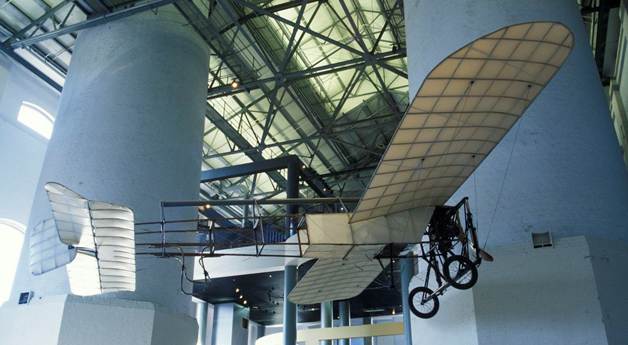
Hanging from the
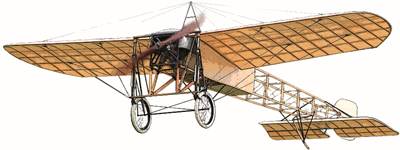
ceiling of the Powerhouse Museum in Ultimo, Sydney, is the Blériot monoplane
imported to Australia by Maurice Guillaux in 1914. With this aircraft Guillaux
conducted many air displays and created a sensation with his daring aerobatics,
for which the machine had been specially made.
In July 1914 he flew Australia’s
first ‘official’ air mail flight, a one-off journey from Melbourne to Sydney,
taking over two days in the process. There was a major re-enactment in 2014,
described in the booklet 100 Years of
Australian Air Mails.
The second such exercise was
performed by airman Basil Watson, and his story is told Australia’s Second Air Mail.
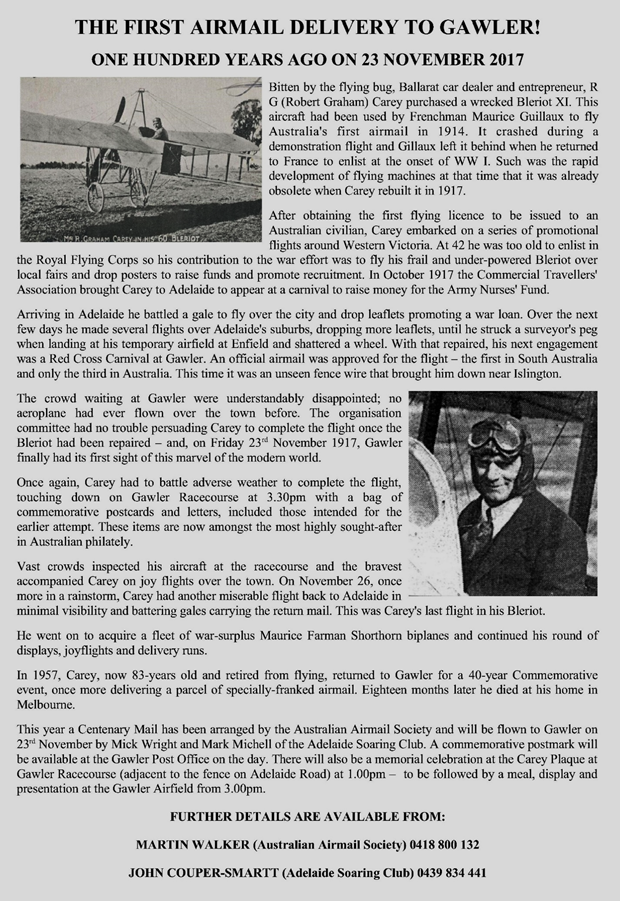
W Graham Carey purchased Guillaux’
aircraft and on 23 November 1917 a third airmail demonstration flight occurred,
from Adelaide to nearby Gawler. The production of this booklet marks the
centenary of the airmail flight, being commemorated by a re-enactment on 23
November 2017 (see pages 9 and 10).
But Graham Carey was a remarkable
person whose story deserves to be more widely known. I recommend the book A Message from the Clouds, by Des Martin
and Bertha Carey, published in 2004, and still readily available. For this
brief treatment of Graham Carey I have plundered many
remarkable insights and unique pictures, with the generous permission of the
editor, Edith Martin. Direct quotes from this book are in inverted commas with
no other acknowledgement.
Contents
Adelaide and the airmail flight
Commemoration flights: 1957, 1967, 1992, 1997 and 2017.
Carey: the later flying
adventures
Introducing
Graham Carey
Robert
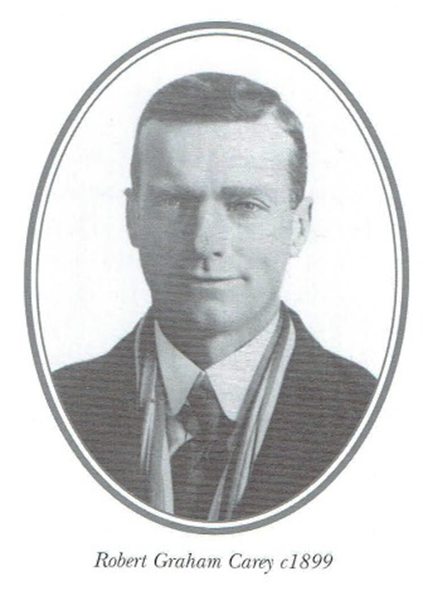
Graham Carey was born at Warnambool, Victoria, in 1874, but his family moved to
Melbourne in 1879. His father, Robert, tried his luck as a gold miner before
settling as a coach driver for Cobb and Co.
Robert
senior worked for other people but, at the age of 20, his son began a transport
business and a hay and corn store, which prospered. He married Edith Gilchrist,
who worked for a Melbourne printing firm, in 1899. As well as providing the
family with six offspring, she was an active participant in his ventures. She
suggested that he change his signature to the more imposing R Graham Carey and
he was generally known as Graham.
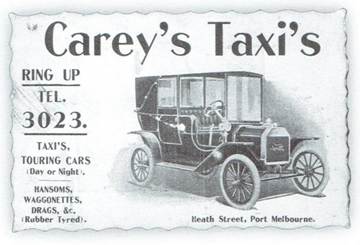
By 1907, when Carey was 33, Carey’s Port Melbourne
Livery Stables, (phone 3023), was offering to convey patrons in everything from
rubber-tyred hansom cabs to luxurious wedding coaches with a crew of liveried
attendants. A year later, Carey’s Taxis were offering ‘handsome 20 hp touring
cars (model T Fords) on call 24 hours a day’. In April 1912 his enterprise
became a public company with a capital of £50.000.
In 1924 it merged its operations with other firms, retaining only freehold
properties, and survived until 1934.
 He
himself had a reputation for elegance, and was ‘partial to wearing a silk scarf
when dressed in his best’; he did not smoke, drink or swear, and was always
socially and politically active.
He
himself had a reputation for elegance, and was ‘partial to wearing a silk scarf
when dressed in his best’; he did not smoke, drink or swear, and was always
socially and politically active.
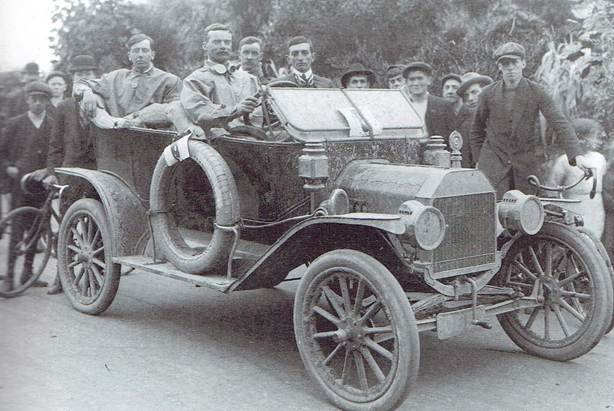
In 1912 he
moved to Ballarat, and established a motor garage selling Ford cars. In 1913 he
drove one of these cars in the Reliability Trial run from Sydney to Melbourne,
winning the event in his 20 hp tourer which returned 31.8 miles per gallon and
gained full points for reliability.
Carey and the Blériot
Among his
many other interests, Carey was a member of the volunteer Light Horse and at
the outbreak of the war was keen to take part. He was refused enlistment in the
Australian Flying Corps due to his age (42), so he planned to learn to fly and
try again. He was friendly with Edwin Prosser, a British pilot, who had moved
to Ballarat in 1913.
Aircraft
were scarce, but Carey learnt that Maurice Guillaux’s Blériot was still in
Australia. The aircraft had crashed at a display at Ascot Racecourse, now part
of Mascot (Kingsford-Smith) airport, on August 1, 1914, three days after the
outbreak of the war. Guillaux was injured, but was able to walk away from the
crash. Contrary to some reports, the aircraft was repaired, and on 12 September
Guillaux gave his last display in Australia, at Bathurst. This was a full
aerobatic display, as per the usual Guillaux program, with the addition of a
display of aerial bombing. But Guillaux was already the subject of some
criticism for failing to return home to take part in the war, and sailed to
Europe in the first convoy of Australian troops to be sent to the war, on 22
October.
It is not
clear whether Guillaux offered his aircraft to the Australian military, either
for purchase or as a donation, but it is clear that there
was no requirement for such an aircraft at Point Cook. Keith Isaacs, in his
book Military Aircraft of Australia
1909-1918, lists five Blériots that were offered to the fledgling air
group, but only one was accepted. It is just as well that Guillaux’s aircraft
was not used at Point Cook, because none of the impressed aircraft survived the
war.
 Guillaux’s aircraft was left in the care of the
export company Messageries Maritimes, probably to be sent later, but
this never happened. The transfer of ownership to Carey was made with the
assistance of quite an interesting character in Australian aviation history,
Jean Claude Marduel, whose story is the subject of a special section later in
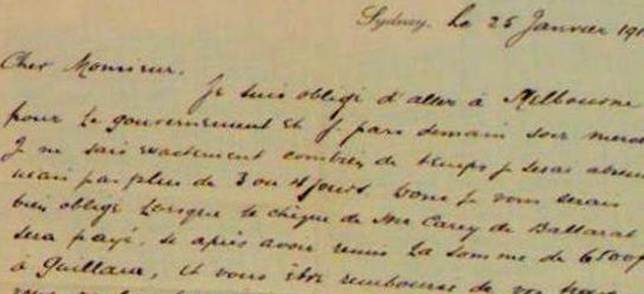
this booklet (page 20). With
Marduel’s help Guillaux settled outstanding storage charges on the Blériot, and
then Marduel transmitted the sum of 6800 French Francs, received from Carey, to
Guillaux in January 1916. A relevant part of Marduel’s letter is below.
Guillaux’s aircraft was left in the care of the
export company Messageries Maritimes, probably to be sent later, but
this never happened. The transfer of ownership to Carey was made with the
assistance of quite an interesting character in Australian aviation history,
Jean Claude Marduel, whose story is the subject of a special section later in
this booklet (page 20). With
Marduel’s help Guillaux settled outstanding storage charges on the Blériot, and
then Marduel transmitted the sum of 6800 French Francs, received from Carey, to
Guillaux in January 1916. A relevant part of Marduel’s letter is below.
The Blériot
was nominally a single seater, and it had been specially built as an aerobatic
machine and was exceptionally difficult to fly. (After the successful Channel
flight, Louis Blériot became a very successful manufacturer, and actually tested his designs in a wind tunnel. He could
tailor the wing section, wing area and similar factors to meet exactly the
customer’s needs).
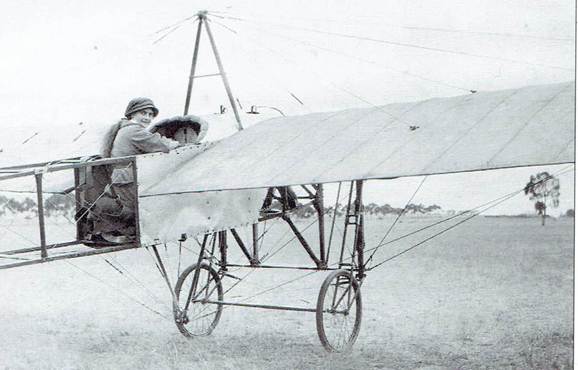 Carey’s
first airfield was Ballarat Common, but, following protests, he moved to
Bacchus Marsh, using a 500 yard stretch of the racecourse. Prosser was his instructor: Guillaux had taken up
passengers, so probably Prosser took Carey as passenger on some of his early
flights. But with determination, Carey set about the task of learning to be a
pilot.
Carey’s
first airfield was Ballarat Common, but, following protests, he moved to
Bacchus Marsh, using a 500 yard stretch of the racecourse. Prosser was his instructor: Guillaux had taken up
passengers, so probably Prosser took Carey as passenger on some of his early
flights. But with determination, Carey set about the task of learning to be a
pilot.
An early lady passenger at Bacchus Marsh.
Because of
the rotary engine’s torque effect, it took many attempts before he was even
able to taxi the aircraft in a straight line. Then he gradually increased
speed, and was able to raise the tail wheel off the ground at about 40 mph. Then
came longer and longer ‘hops’, reaching a height of about 50 feet. Finally he completed a circuit, marred
only at the landing when he hit a part of the race starting apparatus.
This was
quite an amazing achievement, especially remembering that the Blériot was a
very ‘hot’ machine for its time. After many local flights, on November 23,
1916, Carey flew to Point Cook where he was tested by the instructors. He was
awarded the Australian Aero Club Aviator’s Certificate, number 34. It was
signed by Lieutenant Eric Harrison, commander of Point Cook. Harrison was an
Australian who had been deeply involved in aviation since going to England in
1912, at much the same time as Hawker.
Carey sent
a letter to the Defence Department, enclosing his Aviator’s Certificate, and
sought again to enter the Australian Flying Corps. However
he was rejected, again on the grounds of his age.
 Meanwhile
he had extended his flying activities. He established a flying school at
Ballarat, with Edwin Prosser as chief instructor. Carey later took over this
post himself, so it is obvious that flying was his top priority among his many
enterprises. As well as training pilots, the school gave displays, went
‘barnstorming’ and took part in advertising programs. Prosser performed with
the Blériot at the Colac Regatta, on New Year’s Day. This was hugely
successful: trains ran from surrounding areas, bringing thousands of
spectators. Profits went to war charities.
Meanwhile
he had extended his flying activities. He established a flying school at
Ballarat, with Edwin Prosser as chief instructor. Carey later took over this
post himself, so it is obvious that flying was his top priority among his many
enterprises. As well as training pilots, the school gave displays, went
‘barnstorming’ and took part in advertising programs. Prosser performed with
the Blériot at the Colac Regatta, on New Year’s Day. This was hugely
successful: trains ran from surrounding areas, bringing thousands of
spectators. Profits went to war charities.
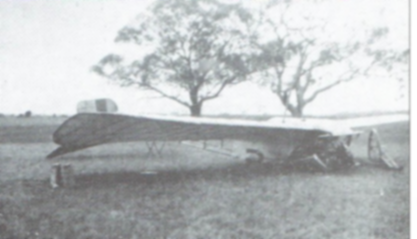
May, 1917: an eventful take-off
attempt.
Prosser
was far more adventurous than Carey. He performed loops and other aerobatic
stunts at displays. Carey, considerably less experienced, contented himself
with more mundane flying. Prosser and Carey continued to give displays, but
gradually Carey took more of the limelight.
A small,’
unofficial’ air mail was carried between some towns; the mail from Mortlake and
Ararat to Horsham was delayed by a rather spectacular crash at Ararat. A very
successful show at Horsham was followed by a tour to Dimboola, Natimuk and
Murtoa.
Carey then
went to Adelaide, where his performances included Australia’s third official
air mail flight…….
Adelaide
and the airmail flight
The Commercial Travellers
Association had been a sponsor of Guillaux’s 1914 Melbourne-Sydney mail flight,
and were a very active social group throughout the country. They raised money
for the Red Cross and the Army Nurses’ Appeal, and they engaged Carey to give
displays in South Australia during October and December 1917.
‘In a heavy gale, on
Saturday 27 October, Carey flew over the Adelaide Oval where a carnival was in
progress. He dropped mail…… [but] the wind carried the parachute to thePort
Adelaide Railway Station nearly six miles away. During the flight, Carey bombarded
the city with Enlistment and Liberty Loan leaflets……. when he went against the wind
the Blériots’ speed was about 40 miles per hour; with the wind it was between
90 and 100 mph’.
 He
moved on towards Gawler, about 50km north of Adelaide. En route he collided
with some telegraph wires, requiring yet another repair and delay. He then
promised to try again ‘rain or shine’.
He
moved on towards Gawler, about 50km north of Adelaide. En route he collided
with some telegraph wires, requiring yet another repair and delay. He then
promised to try again ‘rain or shine’.
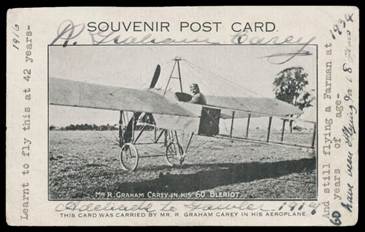
Original
postcard from Mossgreen stamp catalog, online
At this stage an airmail cargo was prepared. There
were ‘some 100 postcards at 2/6d and 10 letters, including one from the Mayor
of Adelaide to the Mayor of Gawler’, carried on 27 November 1917. 2/6d could be
equated to about $30 in modern money: a postage stamp cost a penny, 2 shillings
and 6 pence being 30 pence.
These postcards are particularly valuable. In May
2013 the philatelic auction firm Mossgreen sold an Adelaide to Gawler card for
$1620. An even rarer card carried on the return journey, signed by Graham
Carey, was sold at the same auction for $3720. Both journeys were made in very
bad weather, with high winds.
This was one of Carey’s last expeditions in the Blériot.
A Message from the Clouds suggests
that this was because of shortage of spare parts. He had done very well with
this old design specialist aircraft, and it was a good decision to update to
something more modern.
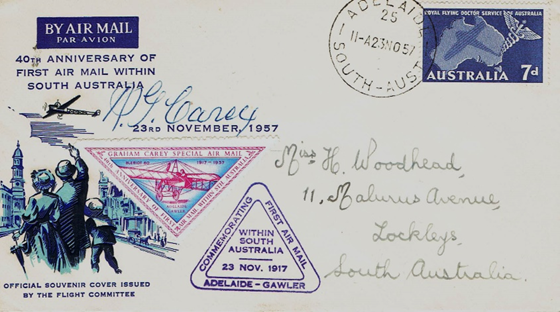
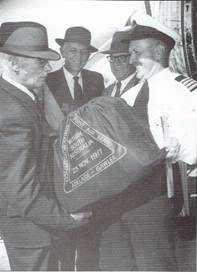 Commemoration flights: 1957, 1967, 1992, 1997 and 2017.
Famed philatelist Nelson Eustis organised a
philatelic event to commemorate the fortieth anniversary
of Carey’s airmail flight. No fewer than 12,651 articles were carried in a
Guinea Airways DC-3. Carey himself was a passenger. At Gawler, the mail was
received by Walter Nelson, who had received the original mail in 1917.
Carey died on June 5, 1959, aged 85. ‘His son Perce
took his place at the 50th anniversary of the South Australian flight [made by
an RAAF Iroquois helicopter] and Bertha [Carey] and her daughter Edith took
part in the 80th anniversary and commemoration’ in 1997’.
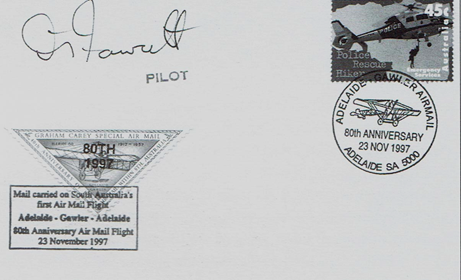
Above: 80th
anniversary envelope: Below: another commemoration flight occurred in 1992.
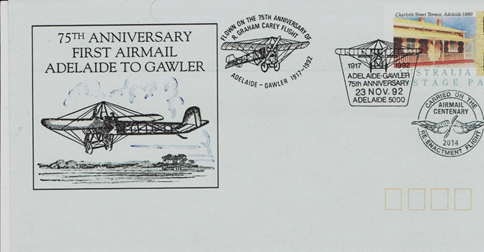
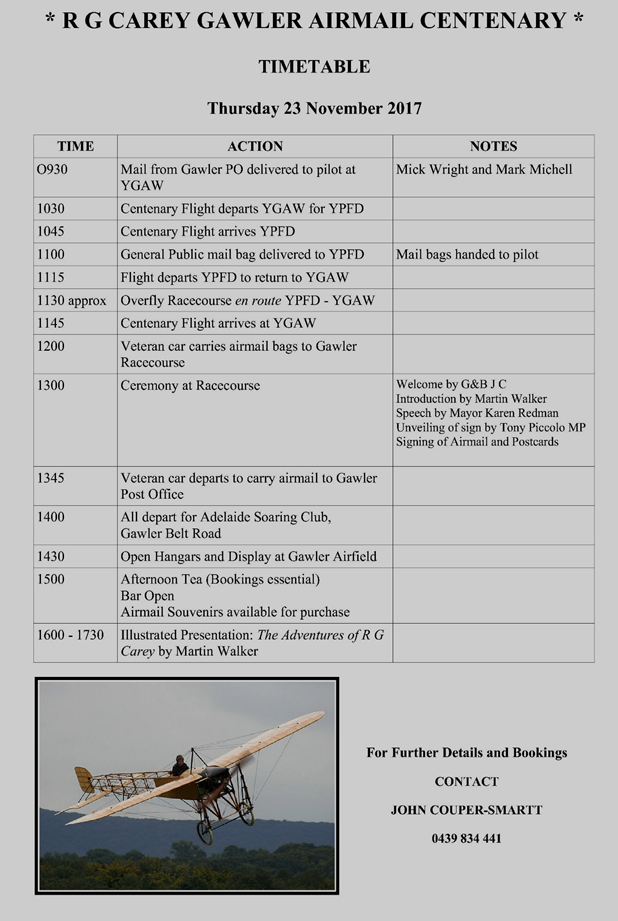
The following pages detail the arrangements for the
centenary commemoration flight as at 7 November2017.
Later
history of the Blériot
According to A
Message from the Clouds ‘the records show that on February 24 1926 the Blériot was sold to Edwin Prosser, who had
returned to Australia and was then living at Wentworth. On March 9 of that year
Prosser crashed at Tamworth and Carey repossessed the aircraft ‘in somewhat
bent condition’.
The Blériot was subsequently sold to K J Chaffey, a
grazier, of ‘Yarrandale’, Deniliquin. Chaffey had
been a pupil of Carey’s. There is some doubt about whether Chaffey ever flew
the aircraft at Deniliquin. In December1935 Chaffey wrote to the Defence
Department, outlining the story of the aircraft and offering it to the
Department as a piece of historical memorabilia. There was interest in
preserving it in a proposed collection based around Kingsford-Smith’s famous
Southern Cross.
By this time, the aircraft was completely
dismantled. The machine was assessed by one J D Jarman of the Defence
Department, reporting on September 26, 1936. A Message from the Clouds summarises the report: ‘The wings and
tail unit, in fairly good condition, were kept in a tin shed.
The fuselage, for all that it had a few cracks and some weather deterioration,
could be repaired and was out under a tree in the yard. The back plate (engine
mounting) was cracked and rusted, but could easily be repaired. The dismantled
engine seemed to be all right and kept on the verandah covered by chaff bags’.
Jarman recommended the purchase of the aircraft and
eventually on January 9 1937, £25
was paid and the machine was sent to Mascot Aerodrome for storage, awaiting the
erection of the Southern Cross memorial, which did not eventuate.
On May 14, 1941, Arthur Penfold, curator of the
Sydney Technological Museum, (now known as the Museum of Applied Arts and
Sciences) asked for the machine to be transferred to his care. This 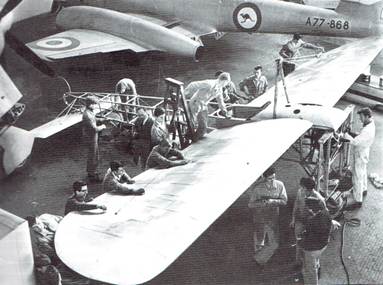 was
agreed, and students of Sydney Technical College carried out a restoration,
manufacturing many new parts in the process (left). It was displayed at Mascot for the airmail commemoration
flight of 1964 and is now preserved at the Powerhouse Museum, the main site for
the Museum of Applied Arts and Sciences.
was
agreed, and students of Sydney Technical College carried out a restoration,
manufacturing many new parts in the process (left). It was displayed at Mascot for the airmail commemoration
flight of 1964 and is now preserved at the Powerhouse Museum, the main site for
the Museum of Applied Arts and Sciences.
The Blériot can claim to be about the fourth most
significant pre-World War I aircraft still preserved. The first is undoubtedly
the Wright Flyer, preserved in the Smithsonian. The second is Blériot’s
cross-channel aircraft, preserved in Paris. Italy holds another Blériot,
remarkable for being the first aircraft to be used for bombing in wartime. But Guillaux’s
Blériot also has a remarkable history, and thus, great significance.
Carey:
the later flying adventures
Carey’s
aviation company
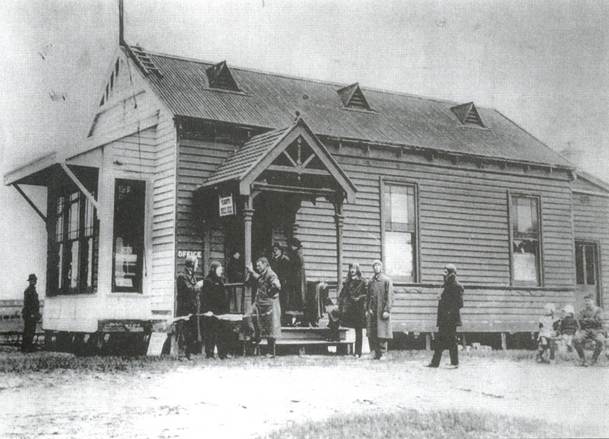 Though
the use of the Blériot had declined, Carey had still great interest in
aviation. In 1919, with the financial backing of businessman Arthur Fenton, the
Mayor of Essendon, he set up a new home and flying headquarters adjoining the
Port Melbourne rifle range. A church hall was transported to the site and
became a combination dwelling and aircraft facility: the front section was the
clubroom and office of the Melbourne Air Service. This was one of the first commercial
enterprises in the area of Fishermens Bend, which developed
into a major industrial area, home, for example, to General Motors Holden.
Though
the use of the Blériot had declined, Carey had still great interest in
aviation. In 1919, with the financial backing of businessman Arthur Fenton, the
Mayor of Essendon, he set up a new home and flying headquarters adjoining the
Port Melbourne rifle range. A church hall was transported to the site and
became a combination dwelling and aircraft facility: the front section was the
clubroom and office of the Melbourne Air Service. This was one of the first commercial
enterprises in the area of Fishermens Bend, which developed
into a major industrial area, home, for example, to General Motors Holden.
The ‘Careydrome’ combined residence, clubhouse and airfield
office. Some partitions were actually wings of the
Farmans wrecked in the storm of 11 August.
His aircraft were purchased from the Government,
being surplus to the requirements of the Central Flying School at Point Cook.
The school had acquired about 27 aircraft during the war. Relatively late in
the process, four Maurice Farman Shorthorns and some DH 6s 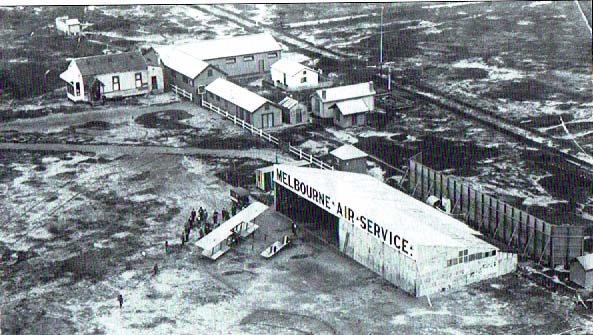 were acquired, but in 1919 the
Imperial Gift of 100 aircraft from the UK was announced and there was no need
for the older aircraft. Two DH-6s were offered for sale at £1800
each and four Shorthorns at £1500 each. They did not sell at
this price, but eventually the DH-6s were sold, and Carey,
a good negotiator in such matters, acquired the Shorthorns for £400 each,
including flying lessons and many spare parts. In actual fact,
the Royal Australian Air Force was in the doldrums until about 1921, and
Carey’s activities gained a lot of attention.
were acquired, but in 1919 the
Imperial Gift of 100 aircraft from the UK was announced and there was no need
for the older aircraft. Two DH-6s were offered for sale at £1800
each and four Shorthorns at £1500 each. They did not sell at
this price, but eventually the DH-6s were sold, and Carey,
a good negotiator in such matters, acquired the Shorthorns for £400 each,
including flying lessons and many spare parts. In actual fact,
the Royal Australian Air Force was in the doldrums until about 1921, and
Carey’s activities gained a lot of attention.
W H Treloar of the CFS was
the instructor. His story is itself amazing – he was a veteran of the
Mesopotamia ‘half-flight’ whose story is told on pages 31-2. He
was, however, involved in helping Carey set up his base at Port Melbourne. The
four aircraft were flown in on Saturday August 11, 1919, but immediately were
all damaged in a huge gale. Only two aircraft were repaired. When registration
of aircraft was introduced in 1920, using the registration letters G-AU as
prefix, the aircraft were registered as G-AUBC and G-AUCW.
This was the beginning of an aerial enterprise that
lasted until 1933
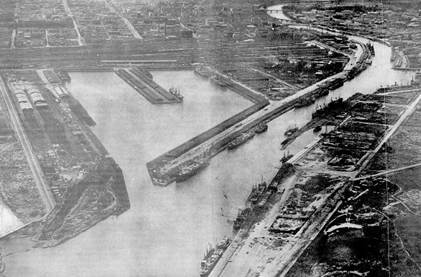
An early activity was aerial
photography. William Herbert Hansom, probably better known at the time by his nom de plume ‘Airspy’ became well known
for his aerial photos, which appeared regularly in the Melbourne journals.
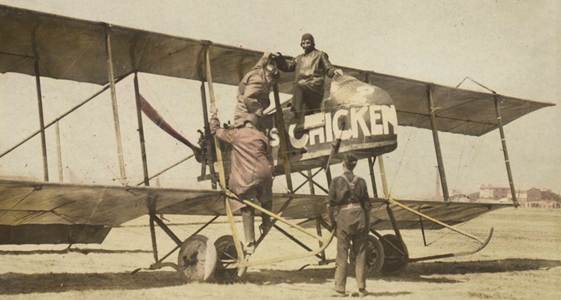 The
photo of one of Carey’s Farmans, and the area of Port Melbourne, 1921, are
examples of his work.
The
photo of one of Carey’s Farmans, and the area of Port Melbourne, 1921, are
examples of his work.
 Australia’s first chartered
commercial flight took place on Thursday, July 17, 1919. ‘The Dodge Motor
Company of America contracted Melbourne Air Service to fly their factory
representative, E C Williams, then on a world tour for the company, to Bendigo for
a conference with their Victorian agents, Messrs Rickard Bros., in that city. ‘Pilot
Carey took off in his No 19 Farman at 9 30 am from Port Melbourne and landed at
Bendigo at 11 15 am. Mr Williams was then tendered a civic reception by the
Mayor and Citizens before attending to his business and enjoying an official
luncheon. Takeoff was at 3 45 pm and flying between 2000 and 5000 feet and
without pushing the machine Carey touched down at 5 05 pm’. This was font page
news. Mr Williams was very impressed, and foretold a great future for aircraft
in Australia.
Australia’s first chartered
commercial flight took place on Thursday, July 17, 1919. ‘The Dodge Motor
Company of America contracted Melbourne Air Service to fly their factory
representative, E C Williams, then on a world tour for the company, to Bendigo for
a conference with their Victorian agents, Messrs Rickard Bros., in that city. ‘Pilot
Carey took off in his No 19 Farman at 9 30 am from Port Melbourne and landed at
Bendigo at 11 15 am. Mr Williams was then tendered a civic reception by the
Mayor and Citizens before attending to his business and enjoying an official
luncheon. Takeoff was at 3 45 pm and flying between 2000 and 5000 feet and
without pushing the machine Carey touched down at 5 05 pm’. This was font page
news. Mr Williams was very impressed, and foretold a great future for aircraft
in Australia.
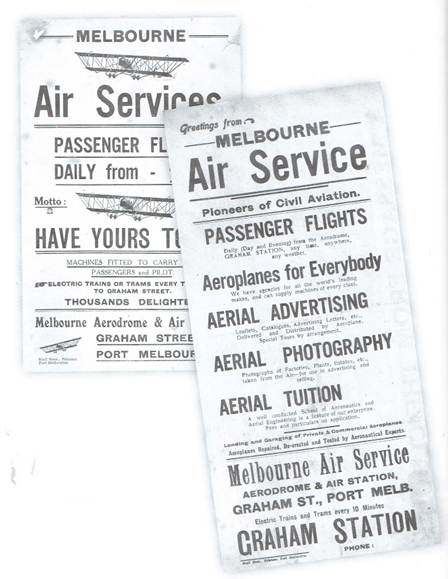 Joy
flights were a major activity of Melbourne Air Services. Passengers were
presented with an elaborate Flight Certificate, encouraging them to learn to
fly at the Melbourne School of Flying, which of course was the Melbourne Air
Services itself. But the main business of Melbourne Air Service was
advertising, at which Carey excelled.
Joy
flights were a major activity of Melbourne Air Services. Passengers were
presented with an elaborate Flight Certificate, encouraging them to learn to
fly at the Melbourne School of Flying, which of course was the Melbourne Air
Services itself. But the main business of Melbourne Air Service was
advertising, at which Carey excelled.
 Messages from the Clouds
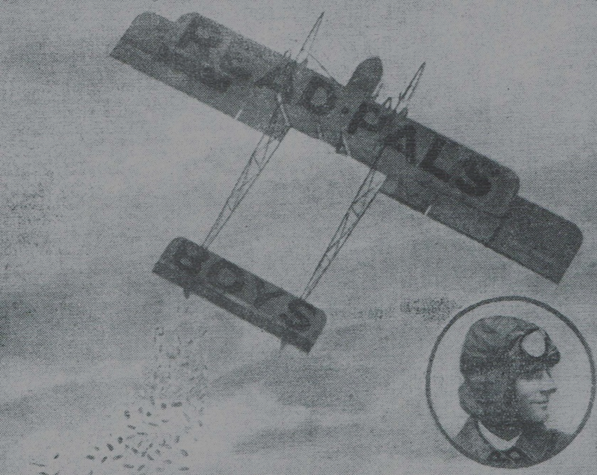
Late in 1920, The Herald and Weekly Times launched the Pals boys magazine, and Melbourne Air
Service set out on a promotional tour. This set a pattern for future such
enterprises.
The underside of the wings and tailplane of the
aircraft were painted with the advertising message, the aircraft flew over town
and dropped advertising pamphlets, then the aircraft would land and joy flights
would be offered.
This first expedition visited 26 Victorian and New
South Wales towns, reaching as far as Forbes in New South Wales. For many of
the townships, this was the first aircraft to be seen. Graham Carey spoke to
school audiences and civic organisations, emphasizing the coming importance of
air travel.
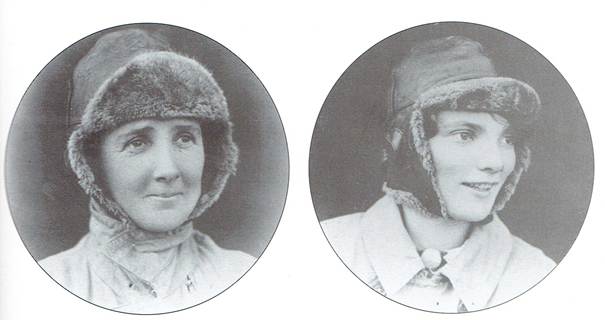
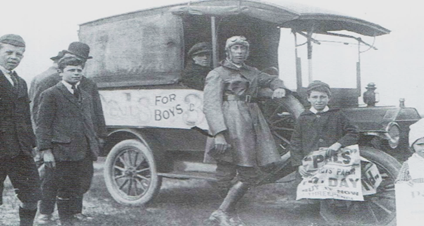 Mrs
Carey and her 19-year old daughter Masie had the less glamorous, but more
arduous, task of supplying ground support from a Model T Ford panel van. At
this time cars were rare in rural areas, and roads were simply unmapped tracks
through farms. There were innumerable gates to be opened and closed. They often
had to negotiate creek crossings and the dreaded wet black-soil plains. A daily
stage of 130 miles (200 km) was a mighty achievement.
Mrs
Carey and her 19-year old daughter Masie had the less glamorous, but more
arduous, task of supplying ground support from a Model T Ford panel van. At
this time cars were rare in rural areas, and roads were simply unmapped tracks
through farms. There were innumerable gates to be opened and closed. They often
had to negotiate creek crossings and the dreaded wet black-soil plains. A daily
stage of 130 miles (200 km) was a mighty achievement.
The van was loaded ‘up to its chin with guns,
revolvers, water bottles, oilskins, leggings and umpteen portmanteaux and
ladies’ paraphernalia too numerous to mention, to say nothing of the excess
baggage from the aircraft’. Mrs Carey kept a record of the expedition – over
2500 miles were covered, and about 500 passengers were carried on joy flights.
They were enthusiastically received at each town.
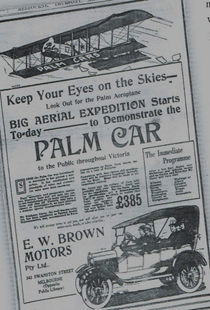 Even
longer expeditions were later undertaken, eg for Palm cars and Cubitt cars, and
for Velvet Soap. The Palm was a rebadged Canadian-built Ford Model T. The Palm
promotion tours involved visits to 173 places, from Melbourne suburbs as far
north as Narrandera, mighty achievements when it is considered that Carey had
to find his own landing places, and fuel and oil had to be specially arranged.
The Palm sales team always had two cars waiting at each stop.
Even
longer expeditions were later undertaken, eg for Palm cars and Cubitt cars, and
for Velvet Soap. The Palm was a rebadged Canadian-built Ford Model T. The Palm
promotion tours involved visits to 173 places, from Melbourne suburbs as far
north as Narrandera, mighty achievements when it is considered that Carey had
to find his own landing places, and fuel and oil had to be specially arranged.
The Palm sales team always had two cars waiting at each stop.
Carey maintained his interest in cars and taxis. He
was very involved in the marketing of the British Cubitt car, of roughly
similar specifications to the Model T, but it could not compete.
Throughout his life, Carey was involved in many
enterprises, not only in advertising and the automobile industry. He was very
active in civic affairs such as Scouting. But in 1928 there was a downturn in
the aviation business, and he was forced to make ends meet by such activities
as engine overhauls in his own home. He was not wealthy, but his life
experience was amazing.
On May 12, 1937, at the Coronation Motor Show,
Carey flew one of his Farmans for the last time, being billed as ‘The Oldest
Plane in Australia…. Flown by the Oldest Airman in the World’ (he was 63). As
mentioned on page 7 Carey was
a passenger in the DC-3 that conducted the 1957 re-enactment, carrying an
amazing 12,651 mail items. He died in 1959, aged 84.
This brief treatment does not do justice to this
remarkable man, but perhaps his best memorial is the restored Farman, in its
livery as CFS-20, at Point Cook. VH-UBC is also preserved in the Canadian
Aerospace Museum at Ottawa.
Marduel,
Prosser and Treloar
These three interesting characters have largely
been ignored in the wider history of Australian aviation. While describing
their interactions with Carey, the opportunity is taken to tell their story in
slightly more detail …
Jean Claude
Marduel
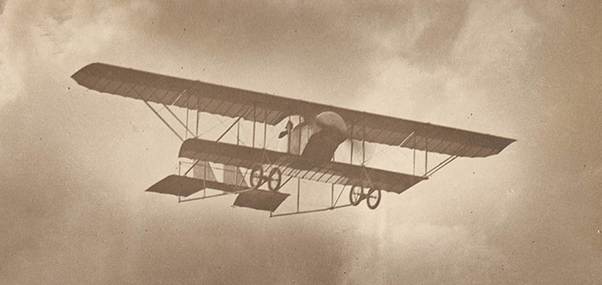 A rare photo of Marduel flying the Caudron GIII from Richmond.
Jean Claude Marduel was born in Lyon, France in November 1877. He
migrated to the USA in 1900, married and had a daughter born in 1902. He
arrived in Australia in May 1908, and became Principal of the Berlitz school of
languages in Sydney. This fashionable school was widely advertised.
In late 1910 he took part in a motorcycle reliability trial from
Melbourne to Sydney. There were 19 starters, but only eight finished: Marduel
dropped out at Albury.
In 1910 he
was associated with the floating of a company that provided hire cars to take
people to Jenolan Caves, promising a profit of £35
a week.
There is
no record of how he became involved with Maurice Guillaux, who arrived in
Sydney on 8 April 1914. Guillaux spoke little English, but his associate Lucien
Maistre had been in Australia before (he was the son of a former French Consul)
and most probably Marduel’s local knowledge was of assistance to the group. We
know that in July 1914, Marduel, as representative of Guillaux, was in
Richmond, arranging for the construction of a hangar for an aircraft that was
being imported by Guillaux, financed by grazier Walter McConochie and Sydney
wholesale butcher T A Field. Their first, and indeed only, aircraft arrived
later in the year – a Caudron G III (pictured). It was assembled by Guillaux and
flown from Richmond by Marduel. Marduel had flying lessons from Guillaux, but
did not gain a formal licence until 16 January 1915, flying the Caudron.
Shortly
after the outbreak of war, the Caudron was offered to the armed services, the
initial offer being the aircraft, the services of Marduel as pilot and a
collection of spare parts, for a price of £1400.
The price was reduced to £1300 including the Richmond
hangar, but the deal lapsed until January 1916, when T A Field offered the
Caudron to the Department of Defence for £500.
As the department was actually prepared to pay £950,
this offer was quickly accepted! 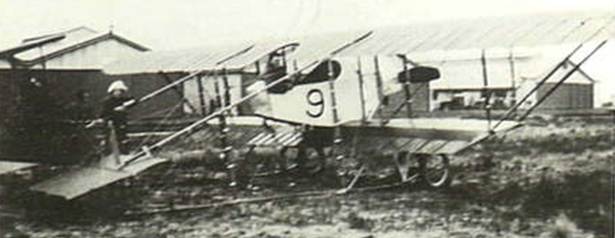
CFS9 at Point Cook; ADF-Serials
photo. AWM AO6142
The
aircraft became CFS9, the ninth aircraft acquired by Point Cook. Its last
flight in this role was 17 August 1916: it was said that the engine was
unreliable, and the aircraft was ‘struck off charge’ late in 1917.
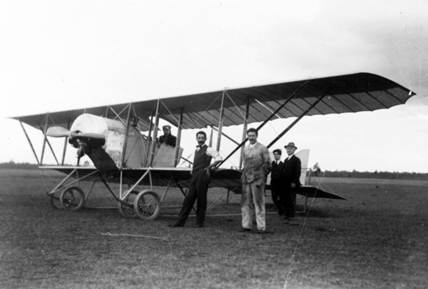 During
this long process, Marduel kept using the aircraft. By November, though not
formally qualified, he was giving joy flights, as rapturously described by one
of his passengers in the Bathurst paper, National
Advocate, on 10 November 1914. The Daily
Telegraph on 7 November 1914 published an aerial photograph of Richmond
township, taken from the Caudron, and claimed that it was the first aerial
photograph published in Australia. In December 1914 he flew from Richmond to
Sydney, claiming this as the longest single hop flight so far carried out in
Australia. He also planned to fly to Melbourne, with Mr Begin as passenger:
Begin had been the manager for Guillaux’s last flying display in Australia, at
Bathurst on 12 September 1914. He planned to make the journey in one day, with
only one stop for fuel at Albury.
During
this long process, Marduel kept using the aircraft. By November, though not
formally qualified, he was giving joy flights, as rapturously described by one
of his passengers in the Bathurst paper, National
Advocate, on 10 November 1914. The Daily
Telegraph on 7 November 1914 published an aerial photograph of Richmond
township, taken from the Caudron, and claimed that it was the first aerial
photograph published in Australia. In December 1914 he flew from Richmond to
Sydney, claiming this as the longest single hop flight so far carried out in
Australia. He also planned to fly to Melbourne, with Mr Begin as passenger:
Begin had been the manager for Guillaux’s last flying display in Australia, at
Bathurst on 12 September 1914. He planned to make the journey in one day, with
only one stop for fuel at Albury.
He
performed at a Patriotic Carnival at the Sydney Showground ion February 27,
1915, along with Delfoss Badgery, including a bomb-dropping exhibition.
In July
1915, it was reported Marduel was based at Day Street, Kensington, and he made
several flights over the city. The area was also used by Delfoss Badgery for
his Badgery Flier, and according to the newspapers, Badgery had assisted
Marduel in maintaining the machine.
On 4
September 1915 he crashed his aircraft at Singleton, while taking off to fly to
Sydney en route from Tamworth. The aircraft ‘turned turtle’ on takeoff, but Marduel
and his passenger were unhurt. His aircraft was the first to be seen in
Tamworth.
Shortly
afterwards, he enlisted in the armed forces under the name of John Charles
Marduel, giving his place of birth as Saint Helier in Jersey Island, (a part of
England that is close to the French coast) to explain his French accent.
He arrived
in Suez on 14 April 1916 with No 1 squadron, Australian Flying Corps, but had a
rather disappointing career in Egypt. Of the 82 days he spent in Egypt, thirty
were spent in hospital suffering from gout and rheumatism. He was discharged on
medical grounds, but the point was made that his illness was exacerbated by the
hot Egyptian climate. He was returned to Australia, but had succeeded in
obtaining a reference from the squadron commander, Major Rutledge, which
recommended his appointment as instructor.
He first
had to become an Australian citizen, which was achieved on 27 September 1916,
and in a letter to the Secretary of the Department of External Affairs, he explained
his previous claim of being a British citizen on the grounds of his eagerness
to enlist.
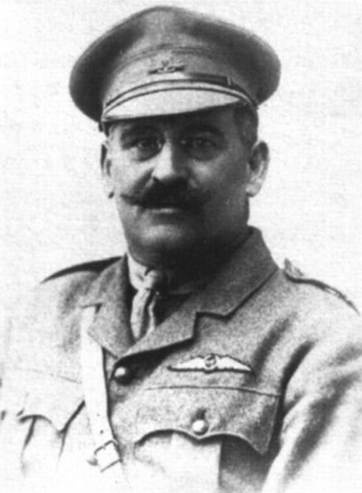 Marduel had a military bearing and
looked the part as an officer candidate.
Marduel had a military bearing and
looked the part as an officer candidate.
For his
second application to join the armed services, he used his correct name, Jean
Claude Marduel, gave his correct place of birth, quoted his naturalization
details, and included Major Rutledge’s reference. He listed his qualifications,
including a B Sc from Lyon University, his proficiency in English, French and
German, four years service in the French army cavalry
and his service in Egypt.
His
appointment as temporary lieutenant and instructor at Point Cook was ‘gazetted’ on 11 January 1917.
The Age of 18 October 1917 reported that
he had flown over Melbourne dropping war loan leaflets in a Farman with ‘war
loan’ painted on the wings.
His name
appeared in the Argus of 18 January
1918 in connection with the inquest into the death of a student at Point Cook,
who had fallen to his death from his Farman aircraft on the previous 16
November. Lieutenant Marduel, his instructor, gave evidence that the victim had
been progressing well as a student, and a verdict of accidental death was
returned. There were many accidents causing death in these early years of
aviaton.
On 10 June
1918 it was reported that he had resigned from Point Cook. His successor had
seen active service and had an MC, and may have had preference. Also, Marduel was
in the process of a divorce, something that carried some social stigma at the
time. The divorce was reported with glee, and in salacious detail, by the
scandal sheet Melbourne Truth on 29
June.
It has
also been suggested that he was tarnished by the rumour that Guillaux had been
executed as a spy. This absurd story developed during November 1917, and was
widely reported before finally being refuted in mid-1918. There is a report in
a later newspaper article that he had to obtain another reference from Major
Rutledge to counter this allegation, but I have not been able to confirm this.
He was
next in the news as a participant in the Arrow Melbourne-Sydney motor cycle
reliability trial, riding an Excelsior.
In January 1919, Reginald Lloyd
proclaimed his newly formed company, Aerial
Services Ltd, with plans to commence an aerial service from Britain to
Australia.
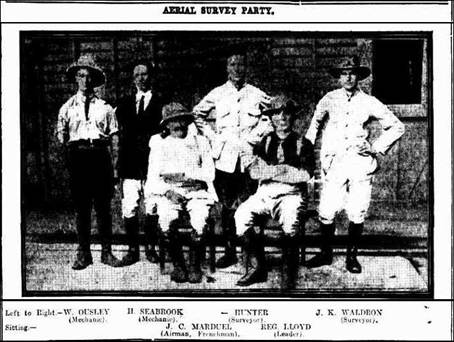 On January 31, 1919, with considerable
publicity, four Indian motor cycles with sidecars, carrying seven men left the home of Reginald Lloyd’s
uncle, in Five Dock, Sydney. The aim was to survey the Australian section of
the route, placing airfields every 300 miles.
On January 31, 1919, with considerable
publicity, four Indian motor cycles with sidecars, carrying seven men left the home of Reginald Lloyd’s
uncle, in Five Dock, Sydney. The aim was to survey the Australian section of
the route, placing airfields every 300 miles.
Newspapers stated that Marduel, ‘a veteran Australian flier who has seen service at
the front’ was in the party, as ‘flying expert and in
charge of motor equipment’ Another report said that ‘Major (sic) Marduel is
wrapped up in aerial work and appears to be the right man for the vast task
which is now in front of him’. After being injured in a motorbike accident near
Roma, he struggled on to Camooweal. Here he became ill and returned to Sydney.
The survey was completed by August 2, 1919, but the ambitious airline plan
never eventuated.
AHSA historian John Scott has researched Aerial Services Limited, and the survey expedition. He points out
that the route used by Ross and Keith Smith in 1919 was largely the route surveyed
by the Lloyd / Marduel expedition. This route had almost certainly ben suggested
by Dr Griffith Taylor, University of Melbourne meteorologist who had lectured
at Point Cook. Popular history has it that McGuinness and Fysh, founders of
QANTAS, were responsible for surveying this route, but this is not entirely
accurate. The matter is too complex to be detailed in the space available here:
further information can be found on www.lockoweb.com/lloydroute.
Marduel’s interest in
things mechanical continued: he next made the newspapers in December 1920 when
he was fined £10 with costs of £3 18s 6d for illegal storage at his home of 390
gallons of Benzine. He claimed that he was worried about forecast shortage of
fuel.
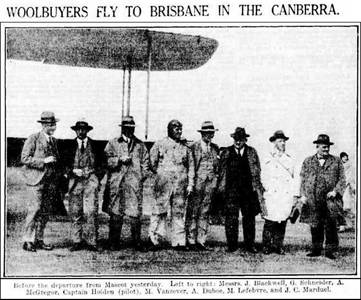 He was noted as attending
the funeral of aviation pioneer Oswald Watt on23 May 1921 and the funeral of
French woolbuyer Rene Playoust
on 26 November 1926. He was prominent in the French community
in Sydney, becoming President of the NSW Union Française in 1926. He was
employed in various business enterprises involving trade deals between France
and Australia. However, his flying days seemed to have come to an end, apart
from being a passenger on a charter flight in Captain Les Holden’s DH-61 Giant
Moth on 17 September 1929, when a group of woolbuyers
chartered the aircraft to fly from Sydney to Brisbane.
He was noted as attending
the funeral of aviation pioneer Oswald Watt on23 May 1921 and the funeral of
French woolbuyer Rene Playoust
on 26 November 1926. He was prominent in the French community
in Sydney, becoming President of the NSW Union Française in 1926. He was
employed in various business enterprises involving trade deals between France
and Australia. However, his flying days seemed to have come to an end, apart
from being a passenger on a charter flight in Captain Les Holden’s DH-61 Giant
Moth on 17 September 1929, when a group of woolbuyers
chartered the aircraft to fly from Sydney to Brisbane.
His death
in France on 10 July 1939 was widely reported in the Australian media, mainly
referring to his pioneering flights in the Caudron.
His
occupation was noted in his probate notice as ‘wool wheedler’, and he was by
this time mainly concerned with the profitable business of selling wool to
France.
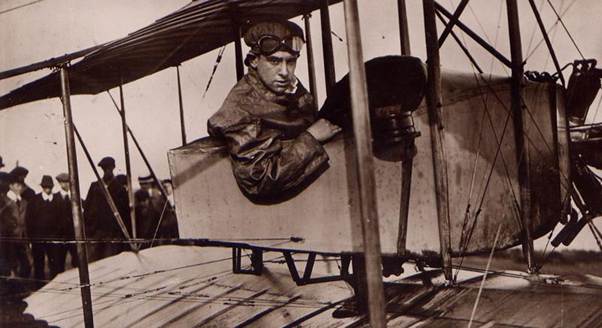 Edwin Prosser
Edwin
Prosser in Wales, 1914. Picture from
*http://cwmammanhistory.co.uk/Amman_Valley_History
Edwin was
considerably younger than Graham Carey: he was born on 16 April 1895, in
Wolverhampton, England. His story is fascinating.
His father appears
to be a self-made man, beginning his working life as a stonemason. He became a
manufacturer of bricks and tiles. He died in 1913, leaving the large sum of
£81,900 13s 9d.
In 1910, aged 15, Edwin
took up gliding, building his own machine (influenced by the designs of Octave
Chanute) in partnership with one A M Bonehill. It was
destroyed the following year in a storm. Edwin may have had his first powered
flight training the following year, in a Blériot, but certainly he learnt to
fly in 1912 at the age of 17 at the Ewen School of Aviation at Hendon, gaining his licence, No.
526, on 18 June 1913. He apparently
owned his own aircraft, pictured above. The following year was giving display
flights in Wales, and taking part in aerial races. In October 1914, he opened a
flying school at Hendon, but sold it the next month, and was reported as going
to Australia to give exhibition flights. This was at the start of World War I,
flying schools were in great demand, but he left, getting as far away from the
war as possible. Interesting questions arise!
He first appears in
the Australian newspapers in May 1915 as the pilot of the Sylvander-Howard
biplane, built in the far western NSW town of Hay, yet another fascinating
story that needs to be further examined. It was claimed that the aircraft made
a flight of a mile, but at a public demonstration later it was barely able to
leave the ground. Prosser left Hay and the project lapsed. He then became the
expert pilot for the resuscitation of the Blériot during 1916, as mentioned on
page 4.
On 20 March 1917 he
is recorded as flying the so-called Andersen Biplane at Geelong, made at least
in part from the aircraft of John Duigan. However, he had applied for
enlistment as an officer in the ‘Aviation Corps of the Australian Army’ on 2
February 1917. Despite listing his employment as Chief Pilot of Ballarat Flying School, he eventually enlisted on 7
September, as a private. Here, his occupation was listed as ‘wood worker’.
By late December he
was in Britain, and was appointed to 7 Training Squadron. AFC. The task of this
group was to prepare people for front-line service, largely for 3 Squadron AFC.
Prosser did not reach the front: his service record indicates some periods of
sickness, and two short periods of absence without leave, before being
discharged from the AFC on 16 April 1919. He was permitted to leave the service
in Britain because his mother still lived in Birmingham.
Apparently, he had
access to even more of the family fortune, because his next venture was into
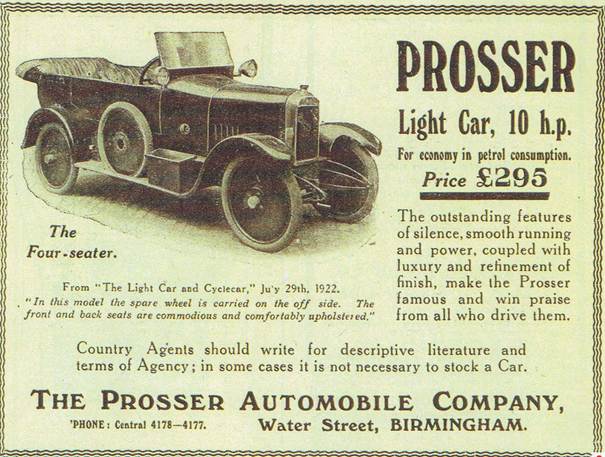
car manufacture. In January 1921 he formed the Prosser Automobile Company in
Birmingham. The Prosser light car came in two-seater and four-seater versions,
with a 10 horsepower Coventry-Simplex motor with integrated clutch and gearbox.
The car was quite well reviewed in the Light
Car and Cyclecar magazine in July 1922 as being ‘a workmanlike, durable and
smart little car’ and the smaller version had a good turn of speed for its
class. However, small manufacturers such as Prosser could not compete with the
huge firms like Morris, whose Morris Cowley was of higher specification, and
because of economies achieved with higher production, of lower cost. The
company ceased production some time in 1922.
In October 1922 he
attempted to re-enter the aviation field, building a biplane glider for a
long-distance soaring competition organised by the Royal Aero Club, but the
glider was wrecked by a storm before it could participate, and Prosser had no
chance of winning the £100 prize.
He then set up the
Midland Wholesale Accessory Company, but this enterprise failed after nine
months, with debts of over £1000. A third venture, manufacturing perambulators,
also failed, and Prosser was declared bankrupt on 31 October 1923, owing the
sum of £4579. Creditors only received 1s 7d in the pound – less than 10%.
By 1926 he had
obviously come back to Australia, as he purchased the famous Blériot from Carey
on February 24. Prosser was living at Wentworth, a rather remote town in the
far south-west of New South Wales. The Blériot crashed at Tamworth on March 9,
1926, and was repossessed by Carey and sold to K J Chaffey, eventually ending
up as a museum exhibit as described earlier, page 11.
In the Capricornian of 16 October 1926 Prosser
was reported as building an aircraft at Rockhampton. The newspaper spoke
glowingly of its remarkable features and Prosser’s brilliant early career as
pilot, but Keith Meggs’ wonderful book describes the way the aircraft was being
built without plans and had very questionable aerodynamics. The Civil Aviation
Bureau inspector urged Prosser not to continue. The aircraft never flew.
He appears to have
had some sort of mental breakdown, ‘coming to the attention of police’ in
Murwillumbah on 31 August 1928, and being remanded for medical examination.
 On 19 October 1929,
in company of Alfred Prosser, (probably a brother who had come from Wales to
bring him back), he returned to England on the steamship Hobsons Bay. Nothing more is known of him until he died on 16 June
1966 in an expensive private hospital.
On 19 October 1929,
in company of Alfred Prosser, (probably a brother who had come from Wales to
bring him back), he returned to England on the steamship Hobsons Bay. Nothing more is known of him until he died on 16 June
1966 in an expensive private hospital.
There are many
examples of early aviation manufacturers who also were involved with automobiles.
For example, Farman and Voisin cars were made in France, and Blériot himself
produced a successful cyclecar. Germany had Rumpler and Italy had Landini. In
the US, there was Curtiss, and later, Ford. In the UK, C S Rolls,
Graham-White, Alliot Verdon-Roe and Short Brothers were successful in both
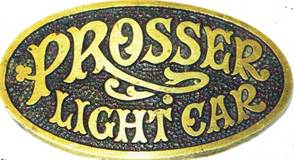
fields. But Edwin Prosser was not to join this illustrious group. The car badge above is the only remaining part of any
Prosser car, and is a forlorn reminder of this interesting character.
Harold
Treloar
William Harold Treloar,
usually known as Harold, was born in 1889. At the time his father was engaged
in various rural pursuits – station management, stock and station agent and
later simply ‘commercial traveller’. Harold himself was very involved in the
auto industry before travelling to England in 1914 to learn to fly.
His progress was followed in newspapers as he
gained Royal Aero Club licence no 855 on 9 July and went on to do advanced
flying at the Blériot School. He returned to Australia shortly thereafter, and
when the first overseas contingent of airmen was sent to war, forming the
famous ‘Mesopotamia Half Flight’ he was an obvious choice., being one of the
most highly trained of the seven trained pilots in the total Australian Flying
Corps. The task of the ‘half flight’ was to provide air support for the Indian
army in Mesopotamia (Iraq).
Mechanics and other tradesmen were collected, most
of whom had no aircraft experience, and the group reached Basra on My 26, 1915,
where they were joined by two British airmen and a New Zealander. Two Maurice
Farman Shorthorns and one very worn Longhorn were the available aircraft.
Despite woeful support facilities, the group managed to operate on May 31.
The aircraft were mainly useful for reconnaissance,
itself a difficult task in aircraft that could barely fly at 60 miles an hour
in still air. Improvised bombing apparatus was made, two-pound bombs being
dropped through holes in the floor of the aircraft. On July 21
two Caudron biplanes arrived, slightly more useful than the Farmans, and it was
while flying one of these on September 16 that Treloar force-landed behind
enemy lines as a result of engine failure. He and his
observer were captured by Arab tribesmen and ‘treated badly’ until they were handed
over to the Turks. At times it seems that captives were treated quite well, but
in 1917 his group of prisoners was imprisoned in terrible conditions as
reprisal for alleged British atrocities, and companions died of disease.
He was released in November 1918 and quickly
returned home. He was, relatively briefly, employed at Point Cook, where, as is
described on page 14, he seems
to have been responsible for the preparation of the Farmans sold to Graham
Carey.
 Treloar took part in an aerial
tour of Victoria publicizing a ‘Peace Loan’. He won an ‘aerial derby’ from
Bendigo to Melbourne on August 27, 1919. The
Age reported on 29 October 1919 that the aircraft had carried 400
passengers in its recent tour, covering over 3000 miles, thus ‘making a record
for Australian aviation’ and demonstrating the perfect stability of modern
aeroplanes and their safety as passenger carriers’.
Treloar took part in an aerial
tour of Victoria publicizing a ‘Peace Loan’. He won an ‘aerial derby’ from
Bendigo to Melbourne on August 27, 1919. The
Age reported on 29 October 1919 that the aircraft had carried 400
passengers in its recent tour, covering over 3000 miles, thus ‘making a record
for Australian aviation’ and demonstrating the perfect stability of modern
aeroplanes and their safety as passenger carriers’.
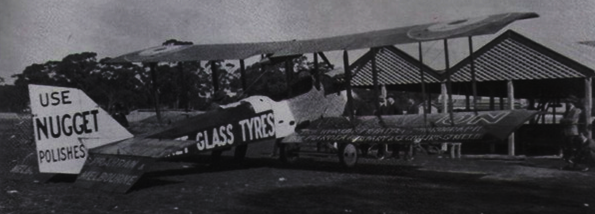
In May 1920 he purchased his own DH-6 from those
offered for sale (see page 14). Like
Carey’s aircraft, it became a flying advertising billboard and for the next few
years he flew around the state giving flying displays and joy flights.
He was later employed as an aviation
officer for the British Imperial Oil Company Ltd in Adelaide, a subsidiary of
the Shell Transport and Trading Company (becoming the Shell Company of
Australia Ltd in 1927), from 1920 to 1940.
Incidentally, he was not ‘the founder of
the Australian War Memorial’ as has been stated: this misunderstanding arises
from confusion with AWM’s first director, Lieutenant-Colonel John Winton
Treloar.
A
note on sources
In a booklet of this size, it is not possible to
give full references. If you would like to know the source of any statement, or
have any corrections to make, please email me at tomlockley@gmail.com.
For Carey, the predominant source is of course his
biography, A Message from the Clouds, by
Des Martin and Bertha Carey, as mentioned in the preface of this booklet.
Marduel’s story is harder to assemble, and
basically his service records, aviation historian John Scott of AHSA (NSW) and
the mighty Trove are the main
sources. I relied mainly on A Message
from the Clouds for information on Prosser, then happened to find the
magazine Automobile for October 2016,
which provided fascinating information on his car-making venture. For Treloar,
there is a marvellous collection of documents and photos on the website of the
National Museum of Australia. Other information came from various historical
treatments of the ‘Half Flight’ and, again, from Trove.
Throughout, Keith Meggs’ magnificent work Australian Aircraft and their Industry has
been indispensable, and I thank the library staff of the Powerhouse Museum for
their wonderful support and tolerance.
Nelson Eustis’ little booklets, and his catalogue
of airmail stamps have provided useful information. Indeed, the format of my
little series of books is influenced by his booklet Fifty Years of Air Mails. He wrote similar booklets on Basil Watson
and Graham Carey, and copies may be found on the shelves at the Sydney
University Library.
The next significant airmail centenary is that of
Captain Harry Butler (not to be confused with C A Butler) who on 6 August 1919
flew mail from Adelaide to Minlaton, the first
over-water airmail flight in Australia. I hope it will also be commemorated.
Tom Lockley, November 2017