Francesco de Pinedo Italian airman in Australia, 1925
Tom Lockley
Some context: other early post-World War I flights
Peacetime led to a range of pioneering flights, including the quite amazing, and almost unknown Italy-Japan flight of 1920, mentioned in the introduction.
· British Vickers Vimy aircraft flew the Atlantic Ocean (1919, Alcock and Whitten-Brown), Britain to Australia (1919, Smith brothers and crew) and Britain to South Africa (1920, van Ryneveld and Brand).
· The first flight of a single-engined aircraft from Britain to Australia was made in 1920 by Parer and Mcintosh in a de Havilland DH9.
· In 1924, eight pilots in four Douglas World Cruisers flew around the world in the northern hemisphere.
· In April 1924 a Dutch Fokker FVII flew from Amsterdam to Batavia (Djakarta), and the Dutch airline KLM became am early pioneering airline.
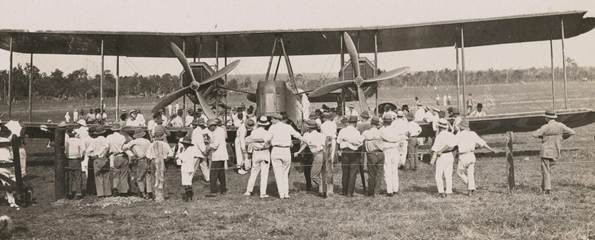 Smith
aircraft at Darwin, 1919
Smith
aircraft at Darwin, 1919
Introduction
Aviation pioneers often do not get the attention they deserve. This is particularly true of Italian aviator Francesco de Pinedo. In 1925 his flight of 55,000 kilometres was the longest such expedition for the time. He flew from Italy to Australia, on to Japan and back to Italy. This was
· The third aircraft to fly to Australia
· The first aircraft to make a return trip from Europe to Australia
· The first flying boat to fly to Australia
His story of his flight, Un volo di 55.000 chilometri, 1927, has not been published in English. This is a pity. This is not just an exciting story about early flying; it is an important historical record that provides many fascinating insights into the world of 1925, especially the way aviation was bringing about great changes.
I hope this web page, written to a very tight deadline, arouses interest: corrections, comments and additions will be very welcome.
Tom
Lockley, tomlockley@gmail.com
Pyrmont, NSW, Australia, March 2025
Contents
Italy to Singapore 20 April -24 May
Singapore to Broome, 25-31 May
Broome to Melbourne: 31 May to 8 June. 8
Sydney to Thursday Island: 6-15 August 23
Thursday Island to Tokyo 13 August October 17
Japan: 26 September to 17 October
Tokyo to Rome: 17 October to 7 November
Epilogue: a World War II episode.
Appendix: de Pinedo’s philately
Civilization is built on water. The world's principal cities are mirrored by seas, rivers, or lakes. Why not utilize these immense, ready-to-use, natural airstrips in place of costly airports?
Francesco de Pinedo: The background
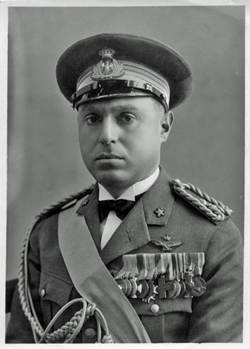 The Marchese Francesco de Pinedo (1890-1933) came from an aristocratic
family from Naples. He became an officer in the Italian Navy in 1910.
His early career was in destroyers, taking part in the 1911-12
Italo-Turkish War, fought in Libya.
The Marchese Francesco de Pinedo (1890-1933) came from an aristocratic
family from Naples. He became an officer in the Italian Navy in 1910.
His early career was in destroyers, taking part in the 1911-12
Italo-Turkish War, fought in Libya.
In this war the Italians were the first to use aircraft in combat, mainly for reconnaissance but also for improvised bombing attacks. In 1917 Francesco undertook flying training, with great success, and joined the Naval Air Division. His career was stellar – winning a bravery award and becoming air commander at Brindisi, controlling five aircraft squadrons, at the end of the war. The use of aircraft in the Adriatic was widespread and the Italians finished the war with considerable air capability. Francesco made flights to the Netherlands and Constantinople in 1921.
In 1924 he transferred to Italy’s newly independent air force, the Regia Aeronautica. He became Chief of Staff and a strong advocate of the use of flying boats. He was regarded as Italy's leading expert on aviation matters, especially after he presented a paper to the Royal Aeronautical Society in London and published an article in National Geographic magazine.
Preferring to fly rather than be an administrator, in 1924 he planned the first of his major flights.
Preparations
Francesco settled on the idea of a flight from Italy to Australia, then north to Japan, and returning to Italy. At 55,000 kilometres this would be the longest flight attempted to date.
Socialist members of parliament thought that these events were dangerous, expensive, and overtly militaristic. Mussolini was
supportive: he had become Prime Minister in 1922, but the parliamentary opposition
was still functioning! The outcome was that Francesco (or his heirs) had to
agree to repay the costs of the aircraft if it was lost!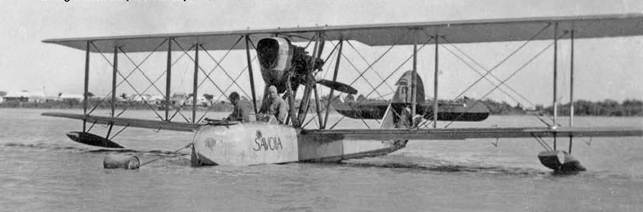
Francesco chose as his aircraft the rugged and reliable Savoia S.16ter, an open-cockpit biplane flying boat. He replaced the 300 horsepower Fiat engine with a French Lorraine-Dietrich 450-hp engine. He recruited Ernesto Campanelli, a long-time colleague, as mechanic (see page 5).
Serious planning began in February 1925, using his own experiences, knowledge gained from other flights, and charts and maps. A great deal of information came from the British Admiralty. The Australian High Commissioner in London was very helpful with information from the Smith flight and the round-Australia flight by Goble and Macintyre, 1924
A lot of information came from an amazing flight that has achieved very little world-wide recognition. On 14 February 1920 eleven Italian aircraft departed Italy to fly to Tokyo. After mishaps, including a fatal crash, two aircraft landed in Tokyo on May 31. Arturo Ferrarin and his mechanic were more successful than the other crew, who had twice replaced their aircraft and travelled part of the journey by train and ship.
In March Francesco went to Britain to organise for supplies of Shell petrol and Castrol oil to be distributed to his planned stopping points. This was a huge undertaking: he had to find places with good communications and reliable sea transport. Numerous spare parts were also distributed along the route, including a new spare engine and wings at Tokyo.
 Another
device was a still which could make saltwater drinkable. Emergency provisions,
spare parts and tools were also carried. He took a Mauser pistol, and a Very
pistol for emergency signals. He also took a fishing line and hooks. The
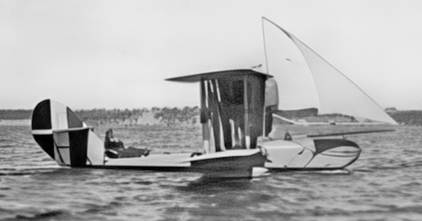
picture shows a sail for emergency use, which he had developed previously.
Another
device was a still which could make saltwater drinkable. Emergency provisions,
spare parts and tools were also carried. He took a Mauser pistol, and a Very
pistol for emergency signals. He also took a fishing line and hooks. The
picture shows a sail for emergency use, which he had developed previously.
Finally, the aircraft was ‘christened with the name of “Gennariello” - because San Gennaro is the protector of sailors – and indeed I never had anything to complain about Him’. The officiating priest also blessed Francesco with holy water.
THE AEROPLANE
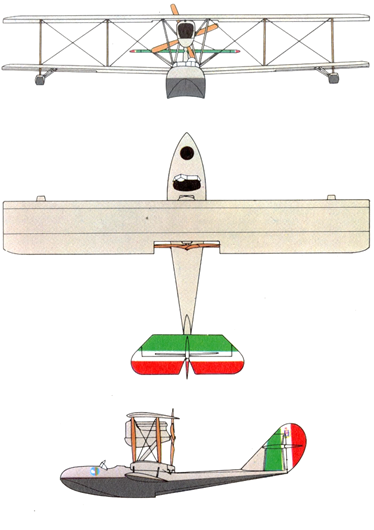 Francesco did not
choose the latest aircraft for this demanding flight. He chose the Savoia
S.16ter, a flying boat, of a configuration that had been well proven during the
war. There was an open cockpit for Francesco and Ernesto, and Ernesto could take
over flying duties to give Francesco a break from concentrating on flying. It
had a strong biplane wing construction and the engine was mounted on a pylon,
as high as was practicable. Length was 9.89 meters (32 ft 5.25 in) and wingspan
was 5.50 meters (50 ft 10.25 in), and was powered by a single Lorraine-Dietrich
12Db engine, producing 330 kW (450 hp). It was much the same size as the
RAAF’s Fairey III seaplane, but had a more reliable engine than the Fairey’s.
The Savoia had a useful range of about 1050 km, against the Fairey’s 900 km,
and cruised about 15 km/hr faster (115 km/hr). But the Savoia’s main advantage
was that the Fairey was a seaplane, supported by two large (and comparatively
fragile) floats, while the Savoia was a flying boat which
floated on a strong boat-like hull.
Francesco did not
choose the latest aircraft for this demanding flight. He chose the Savoia
S.16ter, a flying boat, of a configuration that had been well proven during the
war. There was an open cockpit for Francesco and Ernesto, and Ernesto could take
over flying duties to give Francesco a break from concentrating on flying. It
had a strong biplane wing construction and the engine was mounted on a pylon,
as high as was practicable. Length was 9.89 meters (32 ft 5.25 in) and wingspan
was 5.50 meters (50 ft 10.25 in), and was powered by a single Lorraine-Dietrich
12Db engine, producing 330 kW (450 hp). It was much the same size as the
RAAF’s Fairey III seaplane, but had a more reliable engine than the Fairey’s.
The Savoia had a useful range of about 1050 km, against the Fairey’s 900 km,
and cruised about 15 km/hr faster (115 km/hr). But the Savoia’s main advantage
was that the Fairey was a seaplane, supported by two large (and comparatively
fragile) floats, while the Savoia was a flying boat which
floated on a strong boat-like hull.
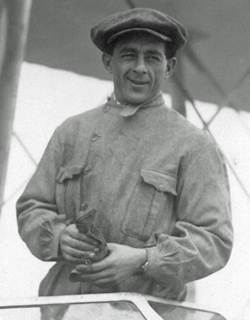 Francesco
recruited Ernesto Campanelli (1891-1940), an expert
engineer and mechanic who had flown with him during the war.
Francesco
recruited Ernesto Campanelli (1891-1940), an expert
engineer and mechanic who had flown with him during the war.
His resourcefulness was amazing, and on many occasions he saved the expedition from disaster. In this brief account, he does not get anywhere the attention that his contribution merited.
Italy to Singapore 20 April -24 May
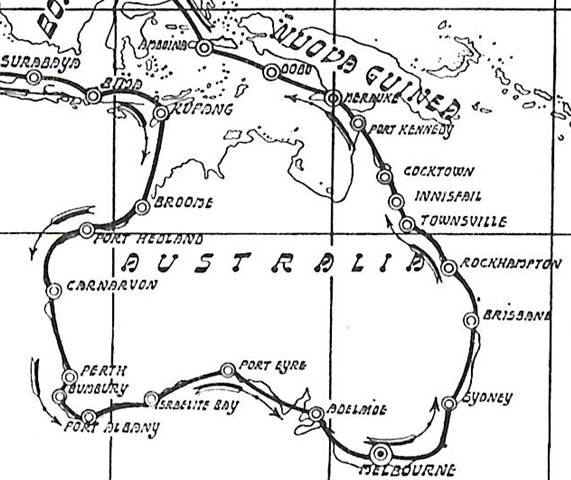
This was the itinerary: Sesto Calente (Lake Maggiore) to Brindisi 20 April; Brindisi to Leros 23 April; Leros to Iskenderum (then known as Alexandretta) 24 April; Iskenderum to Baghdad 25 April; Baghdad to Bushehr 27 April; Bushehr to Bandar Abbas 28 April; Bandar Abbas to Chabahar 30 April; Chabahar to Karachi 3 May; Karachi to Bombay 8 May; Bombay to Rajahmundry (now listed as Raajamahendravaram) 10 May; Raajamahendravaram to Cocanada (now listed as Kakinada) 11 May; Kakinada to Kolkata 12 May; leaving India, Kolkata to Akyab 13 May; Akyab to Rangoon 14 May; Rangoon to Tavoy (now Dawei) 18 May; Dawei to Mergui (Myelk) 19 May; Myelk to Phuket 23 May; Phuket to Penang 23 May; Penang to Singapore 24 May.
This all seems so simple, but to relate all the adventures that occurred would take far too much space in this small publication. A summary will have to suffice. By the standards of the time, Francesco's aircraft was amazingly airworthy, but by modern standards the situation was dire. Engines were unreliable: major events like valve failures were common and had to be fixed on the spot; in many places even automobiles were rare or nonexistent, so getting emergency supplies of fuel and oil was difficult.
Lubricating oil was a particular problem, but on three emergency occasions they purchased castor oil from local pharmacists, who were puzzled as to why so much of this laxative medicine was required! (Actually, the Castrol brand name comes from the fact that Wakefield originally supplied castor oil as a lubricant).
With aircraft travelling at about 170 kilometres an hour even a 30 kilometre an hour wind had considerable effects. Flying in cloud was very difficult. In open cockpits the crew was exposed to all weather conditions. Over mountains and forests engine failure would almost certainly result in death.
Seaplanes and flying boats had their own problems. Water currents, both in inland rivers and in tidal areas were a constant danger, particularly when wind was also a factor. Collisions with boats were frequent, as boatmen often did not understand the dynamics of a moving aircraft.
The strength of the ‘flying boat’ hull is explained on page 4. But the wingtip floats of the Savoia were also fragile.
In many places, there were no people with experience in handling aircraft, which are far more fragile than boats. Over-enthusiastic help caused huge problems.
In this booklet we do not have space to tell the whole story, but, in brief, after many amazing, often terrifying, adventures they were welcomed to Singapore on 24 May.
Singapore to Broome, 25-31 May
The sketch map shows early flights in the NEI.
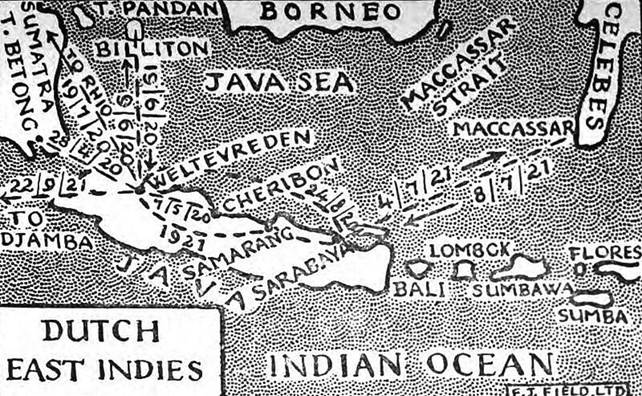
The aviators were made welcome throughout the Netherlands East Indies, a pioneer in air communications. The Dutch Navy had a small aviation section at Batavia, so here they could give Gennariello a good overhaul. A small group of Italians lived in Batavia and there was also a visiting Italian opera group. The airmen regretted leaving! They also checked on arrangements for passage through NEI settlements after leaving Australia. Merauke, Dobo, Ambon and Menado did not have experience with visiting aircraft, but throughout the NEI, even in the most remote places, the logistics worked well, and the locals were supportive and enthusiastic.
They passed through Surabaya and Bima to Kupang in Timor. Unlike the previous two flights to Australia, Francesco flew from Kupang to Broome, not Dili to Darwin and then on to Broome. This saved about 700 km overall.
Because of this long overseas flight, Campanelli temporarily connected the bilge pump to a supplementary oil supply to ensure that there was no possibility of running out of oil. Because of the heavy fuel load, a take-off run of two kilometres was needed. The wind was blowing offshore, and de Pinedo had to turn the aircraft into a crosswind position in the middle of his takeoff run.
All went well, and they landed at Broome at 1 30 pm.
Broome to Melbourne: 31 May to 8 June
The arrival was an anticlimax. A few fishermen nearby took
no notice of their arrival, and there seemed to be so no sign of life.
Francesco put this down to the fact that the day was Sunday. ‘And Sunday, as is
well known, is a time of absolute rest in all Anglo-Saxon countries’.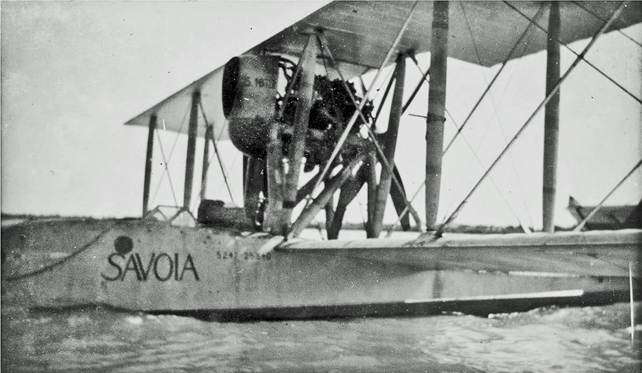
Picture of unknown provenance, said to be taken at Broome.
However, the west coast of Australia was served by Western Australian Airways, and after about half an hour the local agent appeared in a small boat with a small outboard motor. He told Francesco to move their anchorage because there was a difference of 12 metres between high and low tide and otherwise the aircraft would soon be aground. Then they went ashore, carrying their luggage for over 300 meters over mud.
The local doctor checked them for disease and eventually filled in the necessary documentation.
Refuelling the aircraft was a marathon effort: the boat could only carry 16 gallons at a time, which first had to be carried over the mud flats. Few people were available to help them and at 9 pm they stopped work for the day. It was hard to find a place to eat: modern tourists might still sympathise! But soon, a welcoming telegram came from Stanley Bruce, Prime Minister, and later another telegram from Mussolini.
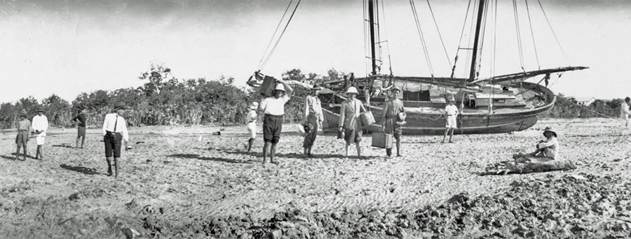
Beach scene at Broome. Again, unprovenanced, but the information with the photo suggests that the picture relates to the visit of Francesco and Ernesto,
 On
the run down the coast to Perth, Western Australian Airways personnel were
quite helpful.
On
the run down the coast to Perth, Western Australian Airways personnel were
quite helpful.
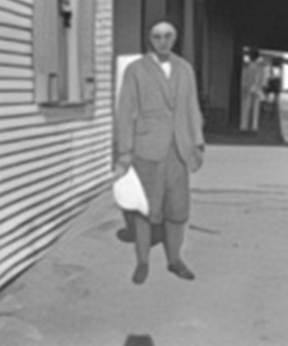
The small coastal towns were fishing centres and ports for the interior mining centres and were not very elegant, as evidenced by the picture of Francesco at Port Hedland. He noted that the walls of the hotel were made from flattened-out petrol tins.
In comparison with the 1924 flight of Goble and Mcintyre, which took about 4 weeks, Francisco’s flight from Broome to Perth was trouble-free.
|
|
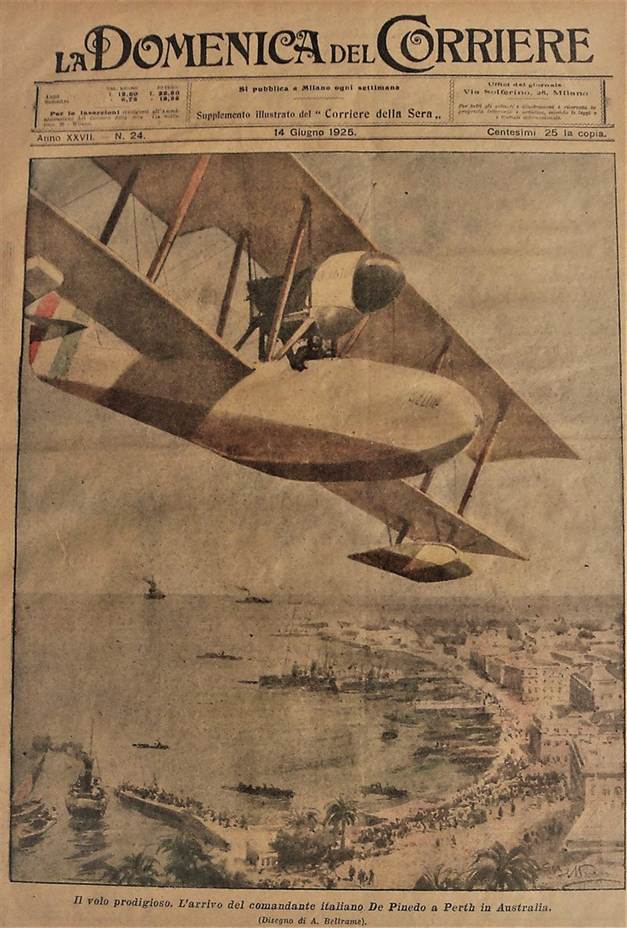
Francesco’s arrival at Perth was front-page news in Italy!
Francesco appreciated Perth as a thriving modern city. Its position on the Swan River was enhanced by ‘flowery and cheerful gardens, homes scattered on the slope of verdant hills, and magnificent parks’.
The plan for this stage was to push on quickly to Melbourne, so after an enthusiastic welcome and overnight rest at Perth they pressed on. However bad weather forced a stop at Bunbury, only 170 km away.
They then moved on to Port Albany, the last major settlement before Adelaide.
The next stop was Israelite Bay. Here, the only building was the telegraph station which was visited by a supply ship only once every three months. Four telegraphists, the manager and his wife and four children were the only inhabitants. The arrangements made from London in March were only just in time to ensure that fuel and oil were available.
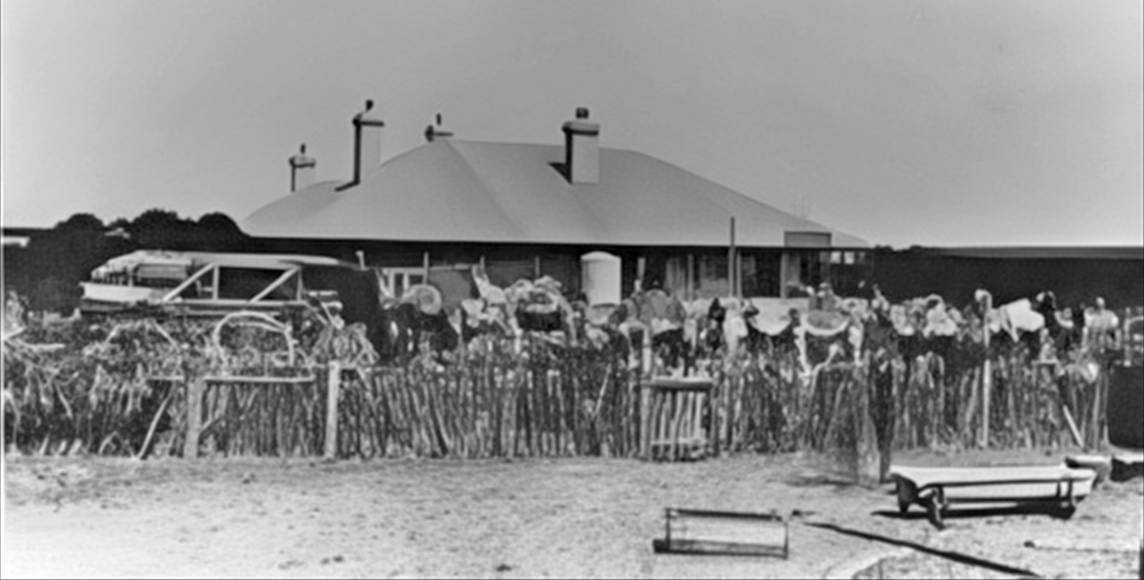
Occasionally Israelite Bay was visited by a camel train, but the visit of an aircraft was even more exciting!
Flying across the Great Australian Bight was dangerous because there were often areas of steep shoreline cliffs. Any forced landing would be disastrous.
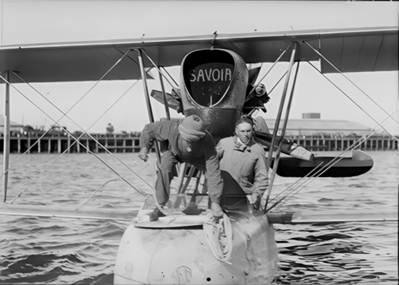 Adelaide,
the capital of South Australia, was another modern and attractive settlement.
Escorted by a RAAF SE5 fighter, they landed in
Adelaide’s Outer Harbour (left). Francesco’s comment: ‘An enthusiastic,
shouting, gesticulating crowd awaited me. When I got ashore the police had to
make way for me. Many were bruised in the crush. Reception at the Town Hall,
banquets, speeches. It was a taste of what awaited us in Melbourne’.
Adelaide,
the capital of South Australia, was another modern and attractive settlement.
Escorted by a RAAF SE5 fighter, they landed in
Adelaide’s Outer Harbour (left). Francesco’s comment: ‘An enthusiastic,
shouting, gesticulating crowd awaited me. When I got ashore the police had to
make way for me. Many were bruised in the crush. Reception at the Town Hall,
banquets, speeches. It was a taste of what awaited us in Melbourne’.
Melbourne: 8 June to 16 July
On 8 June they flew on to Melbourne, the capital of Victoria, probably Australia’s most important city at the time. This marked the conclusion of the first major stage of the flight. Francesco recorded that ‘in fifty days and 160 hours of flying with varying fortunes’, they had covered approximately 23,500 kilometres.
At Queenscliff, at the entrance to Port Philip, two Fairey seaplanes of the Royal Australian Air Force met them and flew to Point Cook airfield where three squadrons of land-based aircraft took off and escorted then to Melbourne. At 3pm they alighted in St Kilda, an inner-city beachside suburb, where about 40,000 people were waiting,
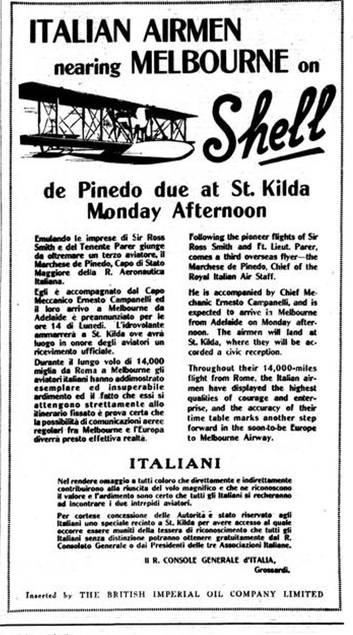 The
airmen were welcomed by a speech by the mayor, in full regalia. The police had
to form a ring around them, to protect them from the enthusiastic crowd - ‘The
Italian Colony seemed to be in the grip of a fit of enthusiastic fury’. They were
instant celebrities of the highest order and were plunged into a huge program
of social activities. Receptions were held by the Governor-General and the
Melbourne City Council – the ‘civic reception’ was of the standard given to the
Prince of Wales at his 1920 visit. The Italians of Melbourne hired a theatre to
present them with a ‘rich gift’. Another theatre gave a gala performance, ‘on
the occasion of which the theatre boxes seemed almost to have disappeared under
a magnificent decoration of flowers and flags’. The Consul-General gave a
banquet involving a who’s who of Australian society.
The
airmen were welcomed by a speech by the mayor, in full regalia. The police had
to form a ring around them, to protect them from the enthusiastic crowd - ‘The
Italian Colony seemed to be in the grip of a fit of enthusiastic fury’. They were
instant celebrities of the highest order and were plunged into a huge program
of social activities. Receptions were held by the Governor-General and the
Melbourne City Council – the ‘civic reception’ was of the standard given to the
Prince of Wales at his 1920 visit. The Italians of Melbourne hired a theatre to
present them with a ‘rich gift’. Another theatre gave a gala performance, ‘on
the occasion of which the theatre boxes seemed almost to have disappeared under
a magnificent decoration of flowers and flags’. The Consul-General gave a
banquet involving a who’s who of Australian society.
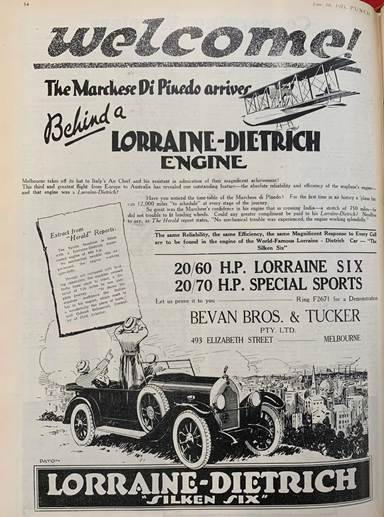
The enthusiasm of the Italian community was encouraged by this advertisement.
|
|
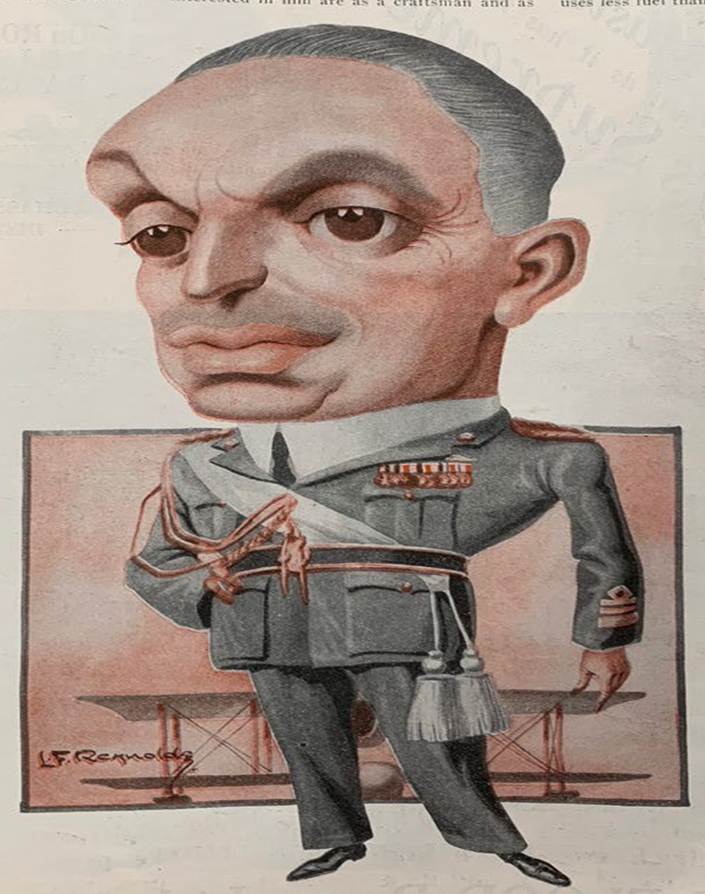
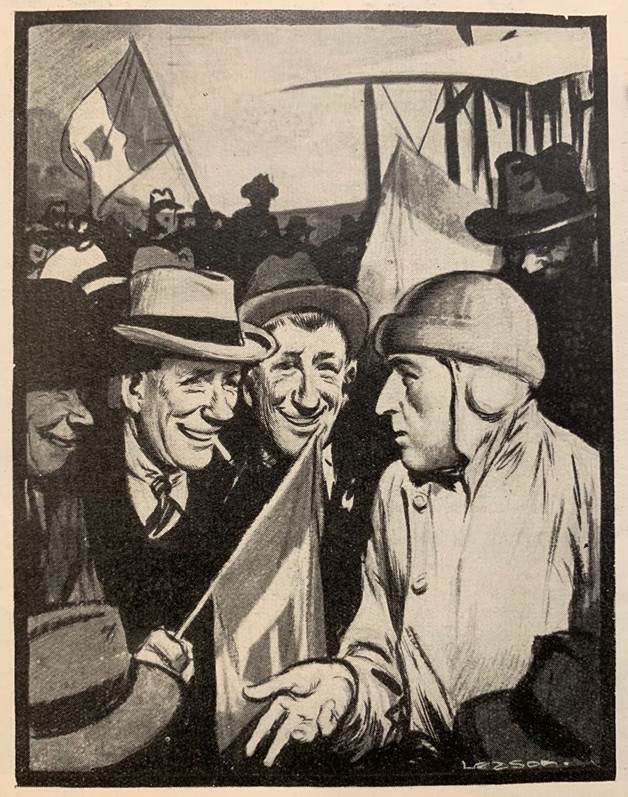
Illustration from a major article in the Melbourne Punch.
He was often recognized in the streets and cheered by onlookers. He was less impressed with the constant attention from newspaper journalists when they asked his opinion on trivial matters.
 The
aircraft urgently needed serious attention, so as Francesco says, ‘it was
admitted to hospital for a complete overhaul’ at Point Cook, the main RAAF
base, 35 km from Melbourne. RAAF mechanics worked with Ernesto. This took five
weeks. Lorraine-Detrich, suppliers of Genariello’s engine, lent Francesco a
luxury car that he mainly used to travel to and from Point Cook.
The
aircraft urgently needed serious attention, so as Francesco says, ‘it was
admitted to hospital for a complete overhaul’ at Point Cook, the main RAAF
base, 35 km from Melbourne. RAAF mechanics worked with Ernesto. This took five
weeks. Lorraine-Detrich, suppliers of Genariello’s engine, lent Francesco a
luxury car that he mainly used to travel to and from Point Cook.
The Royal Australian Navy hydrographic office allowed Francesco to prepare the route to Japan using their facilities.
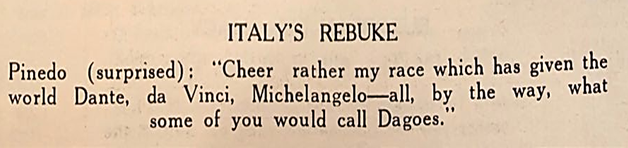
Francesco attended the opening of the Australian Parliament, then still based in Melbourne. He was particularly interested in migration. Recent provisions had restricted the influx of immigrants, except for those coming from England. Italian immigrants were regarded as of lesser quality, and there was even more prejudice against Asian immigrants. He felt that his presence in Australia was opening the eyes of many people about Italy, a sentiment obviously shared by the Melbourne Punch of 4 June 1925, below.
Francesco’s impression of Australian (Melbourne) society -(summarised from Un volo di 55.000 chilometri)
Australians are developing towards a new race of people. Characteristics are love of independence and a love of sport and outside activity which is creating physical changes.
Girls are active and assertive, ‘self-confident and intelligent, healthy and strong’. They are not ‘put down’ in the social structure, and they have lots of freedom.
Education is a major factor - illiteracy can be said to be non-existent. He was impressed by his visits to schools.
Wages are high, but so is the cost of living, ‘more than England itself’. There is a shortage of people willing to do menial work.
However, living standards are good. The houses are single-storey, on separate garden blocks. There are no colossal houses, no unhygienic slums. There is urban sprawl, but there are ‘rapid and well-organized means of communication, wide and well-paved streets’.
Australians are quick to adopt modern scientific discoveries - all houses seem to have radios.
There are plenty of parks and gardens, often featuring native plants. There are many large sports fields, very well cared for and very popular. Night tennis under electric light is popular.
The arts are not yet very far advanced: there is no artistic tradition, no great buildings, no opera house and only occasionally are performances given with foreign artists.
There is no doubt that Melbourne made a big impression on Francesco. There is also no doubt that he made an impression on the locals.
A number of articles complained about the poor quality of Australian service aircraft. From Truth, 29 May:
FROM all quarters of the globe men are ascending in aeroplanes and making landings and records at the same time. Italy's hero, de Pinedo, in his epic tour, made the world admire [and others also do wonderful things but] Australians can make no record flights from Australia. There is not the financial support. But they gamely endeavor to make history, in our Air Force machines, and in their brave attempts too often only add another red entry to the records of fatal smashes.
And finally, a headline from another local publication:
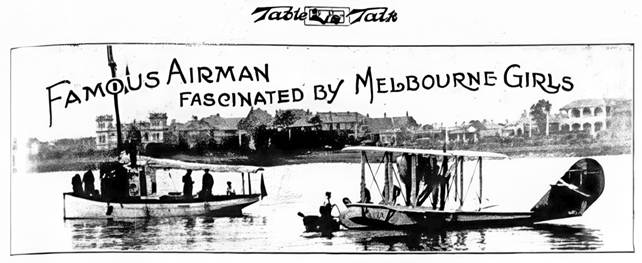
The headline is quite accurate: these sentiments are reported in other papers. But throughout, he steadfastly maintained that he would never marry, and he never did.,
Sydney: 16 July to 6 August
There were some delays caused by bad weather and minor mechanical problems but on 18 July Francesco was farewelled by the Consul-General and some friends, as well as by the commander of the Australian air force.
En route to Sydney, they landed at Eden and without even stopping the engine, filled the oil. A fuel and oil stash at Bateman’s Bay was not needed.
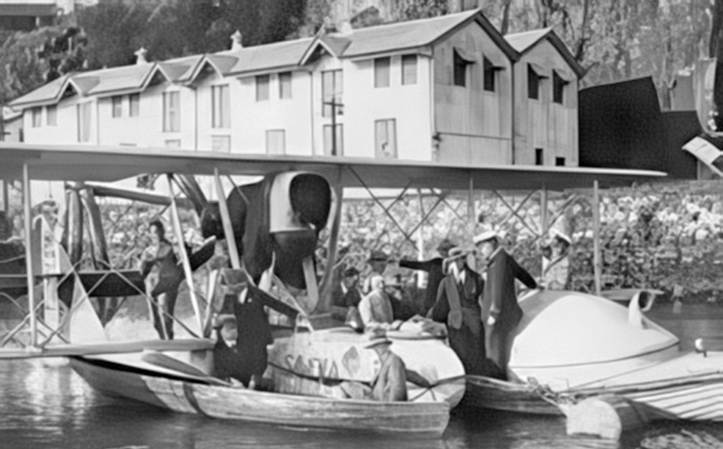
Francesco had insisted on landing at Farm Cove, near the present site of the Harbour Bridge and Opera House, despite its limited space, and a huge crowd welcomed him. The cycle of banquets and receptions began again.
RAAF personnel were keen to help, both from the recently developed Richmond base and the RAAF experimental station at Randwick.
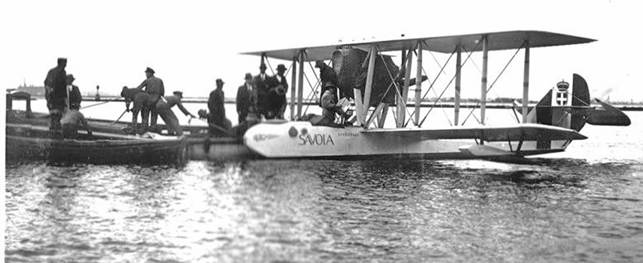
This picture was published in Italian Geographic with this caption: The Gennariello seaplane id being refuelled by Campanelli (carrying a can of petrol on board), assisted by Australian Air Force personnel.
Francesco planned to leave Sydney on 20 July. However, ‘ominous vibrations’ from the engine forced them to return. Lawrence Wackett, a legendary Australian aviation pioneer, arranged for Gennariello to be repaired. Wackett was working feverishly on his single-engined amphibian Widgeon II at the RAAF Experimental Station at Randwick. They discussed the possibility of Wackett reciprocating Francesco's visit by flying the Widgeon II to Rome.
The US Navy was due to visit Sydney with a fleet of 56 ships. The Italian Consul therefore prevailed on Francesco to again delay his departure in order to provide an Italian aerial presence at this spectacular event.
The take-off from Farm Cove on 23 July to greet the US warships was extremely hazardous. The activity on the harbour produced the risk of collision and a very choppy surface. Visibility was severely reduced by smoke haze. The air was crowded with local civil and RAAF aircraft joined by aircraft launched from US ships. Francesco visited some American ships and witnessed the catapult launching of aircraft.
On 25 July Francesco tried again to leave, but the engine problems persisted. The aircraft was beached at Rose Bay, and work was carried out under a canopy. Engine parts were sent up from Point Cook. Members of the Italian community also assisted and guarded the aircraft at night. In the late1930s Rose Bay became Australia’s first international airport for the Britain-Australia flying boat service.
Next page: the newspaper of the Italian Chamber of Commerce reported on the visit with pride.
SYDNEY. THE FLIGHT OF F. DE PINEDO
The Australian press, and above all the Australian public, with that generous characteristic admiration for all that is singular in "sport," followed De Pinedo's flight with approbation and on his arrival expressed their warm and lively admiration for him.
Today throughout Australia Italy takes on a new form: that of an aircraft; takes on a new name: De Pinedo. For those who are Italians in Australia, De Pinedo appears as a living symbol of the tenacity, daring, and industrious desire for progress of the country. For us Italians, the event, apart from the feelings of pride that it can arouse in our hearts, takes on a high significance.
If the Italian air force has been able to prepare this enterprise and Major De Pinedo has been able to put it into action, without fanfare but simply as a normal activity, it means that the Italian air force is one of the most efficiently organized. It also means that Italian industry, rising from the decay of the post-war period, is starting to compete with the major industrial organizations in the world. It also means that the structure of the Nation is firm and solid; that the mood of the country is calm, that work is efficient. Enterprises such as this are the best propaganda for the genius of our people, the best enhancement of the skill of our workers.
And of all the Italians in Australia, those who should most rejoice in De Pinedo's success are precisely the workers, because it is on them that the prestige of the nation, and the good or bad fortune of the country, most immediately reverberate. The greater, the more powerful, the better known Italy will be, the more respected its name will be, the more appreciated will be its children in the distant lands beyond the sea where they go bringing with them the power of their work, a marvellous instrument of progress and civilization.
Sydney to Thursday Island: 6-15
August
Finally, at 9.30am on 6 August, Francesco left Sydney Harbour and, after 4 hours 45 minutes, landed on the Brisbane River at the Botanic Gardens. The water currents caused some problems, but he was assisted by some motorboats. Among the large crowd of waiting people was James Duhig, the Archbishop of Brisbane, who welcomed him in Italian. Francesco was also delighted to be greeted by an Italian officer with whom he had served at Brindisi during the war!
Takeoff the next morning was rather difficult: the river was crowded with ferry boats and spectator craft. There was a minor collision with a ferry, but by noon he was on his way north.
When he reached Rockhampton there was another enthusiastic welcome. However a boat of onlookers, carried by the current, hit the same float that had been damaged at Brisbane. They beached the aircraft and that evening there was a huge storm and with two or three helpers the aviators battled to hold onto the aircraft till 9 pm. Famished, they went to their hotel, but the mealtime had finished – another example of Australian culture! But they were served with about 300 oysters and some fruit. They ate all the oysters with pleasure.
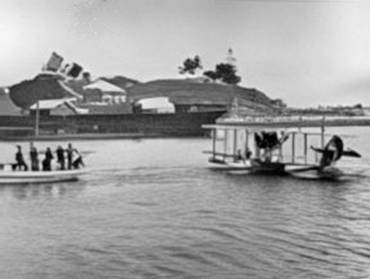 The
next day a very good carpenter who specialized in the repair of racing yachts
repaired the float in a shed of the Motorboat Club.
The
next day a very good carpenter who specialized in the repair of racing yachts
repaired the float in a shed of the Motorboat Club.
Ross Creek, Townsville
Weather was bad on 9 August so on Sunday 10 August they flew to Townsville, 700 kilometres away. This prosperous and attractive settlement was the last major Australian city on the itinerary. The next stages of the journey were sparsely populated, so they stocked up with provisions and were prepared to survive for some time in case of a forced landing.
The Italian Consul in Townsville gave some advice on the Aborigines. He was very sympathetic to them because of their persecution. They had ‘perfection of the senses of hearing and smell’ but the aviators were encouraged to be wary of them.
A major crop in Queensland is sugar cane. This culture began in the 1860s, and many workers were imported from the islands to the north of Australia, in circumstances that do not redound to the credit of the proponents of the industry, but that is another story!
After Federation in 1901 Australia adopted the ‘White Australia’ policy and by and large the Islanders were returned to their homes.
To obtain new workers, migration opportunities were offered to people from European countries, and many Italians came to work in the cane fields. Even this arduous and dirty work seemed to provide a good opportunity for advancement for many Italians.
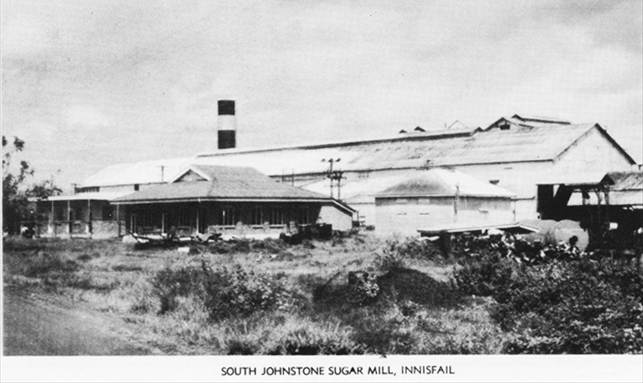
Contrary to the prejudices of the Anglo community, the Italians demonstrated a wonderful work ethic and enterprise. By 1925 Italians owned about 25% of the farms, many worked in the high-tech mills or created other businesses, notably restaurants. Francesco arranged his schedule to have extra time at Innisfail, north of Townsville, where many Italians lived.
The Cairns Northern Herald reported on the visit, describing all the official speeches and briefly mentioning that the Italian community then took him off to be entertained by hundreds of Italians.
The airmen were still suffering badly from the meal of oysters at Rockhampton, but the proud locals insisted that they visit the sugar mill and attend a dance in the evening, a great occasion for the district.
Francesco recorded that they regarded Gennariello ‘as a vital piece of their native land, and throughout the night some watched about it as if it were a sacred thing’.
 At
the time, there was a movement to restrict immigration, ostensibly to preserve
Australian prosperity. Non-English-speaking immigrants suffered discrimination.
De Pinedo took a considerable interest in this.
At
the time, there was a movement to restrict immigration, ostensibly to preserve
Australian prosperity. Non-English-speaking immigrants suffered discrimination.
De Pinedo took a considerable interest in this.
At Thursday Island Francesco reflected favourably on his time in Australia, a ‘bright land with its beneficent climate, its hospitable people, its cheerful and smiling life, was now entering the realm of memory. A dense mist soon hid its last islands from my sight’.
Messages were exchanged with the Prime Minister. Throughout the trip, Stanley Bruce had been encouraging and made congratulatory comments but managed usually to include references to the British and Australian pioneers.
On 13 August Gennariello crossed the Torres Strait and followed the New Guinea coast to the tiny NEI settlement at Merauke, the first of three stops in isolated areas that had never seen aircraft before.
Thursday Island to Tokyo 13 August October 17
This little booklet deals mainly with the Australian section of this marvellous expedition, but the remainder of the trip was also spectacular.
The first stage passed through remote parts of the Netherlands East Indies (modern Indonesia). These stops were in isolated areas that had little contact with the modern world. The NEI colonial officers, and the native inhabitants were welcoming and helpful.
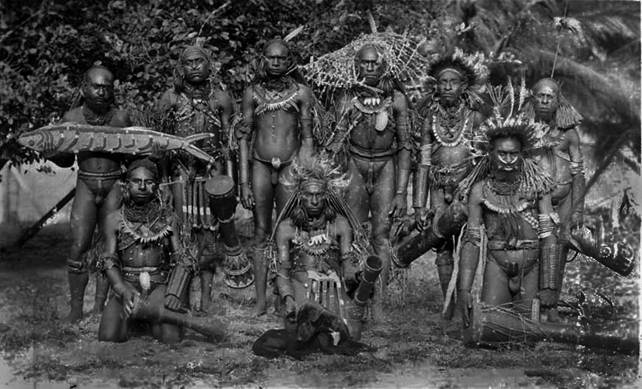
High fashion at Merauke, New Guinea, visited 16 August.
In the Philippines they were helped by US military personnel at the landing places. An emergency landing was necessary on the leg to Manila when petrol was running out, and the locals at Atimonan (about 100 km from Manila) were very helpful. The Italian Consul and the commander of the American air forces drove from Manila to assist. The eventual welcome at Manila was a huge event and as usual, the aviators had celebrity status!
Repairs were made at the US naval base at Corregidor, 50km from Manila, and there was a consequent delay of three weeks. Also, negotiations had to be conducted with Japanese authorities about the route to be taken to reach Tokyo. Japan was increasing its military strength and did not want some of their new facilities, for example on Formosa, to be spied on. Francesco was not even allowed to bring his camera.
In the end, the route prescribed by the Japanese over Formosa was such that de Pinedo complained that ‘it would not have been possible, even on purpose, to trace a more difficult and risky route’. Nevertheless, the welcome at Tamsui, Formosa, was amazing. No seaplane had ever come to Tamsui before and the school children were at the landing spot to sing the Italian national anthem, which they had learnt specially for the occasion.
Francesco flew on to Shanghai, China, then to Mokpo in Japanese-controlled Korea, then to Japan – Kagoshima, Kushimoto and finally Tokyo.
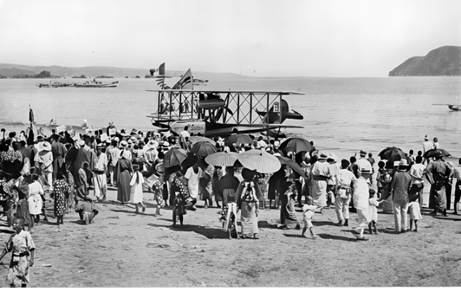 The waterfront at Kushimoto
Japan: 26 September to 17 October
The 37,000 kilometre journey from Italy to Tokyo had taken 251 hours 30 minutes of flight time. In 1919-20 Ross and Keith Smith had taken 135 flying hours to cover 18,250 kilometres. The Rolls Royce Eagle engines of the Smiths’ Vickers Vimy had a typical life of about 100 hours, so de Pinedo’s engine had done very well.
A new engine and a large stock of spare parts had been sent to Tokyo, and the main need was to completely overhaul the aircraft and replace the engine. Work began immediately, with the help of an Italian engineer co-opted from Shanghai. The Japanese happily sent a team of skilled workers to assist – they obviously appreciated this opportunity to work on a new type of aircraft and learn from watching Ernesto. They stripped out the fuel tanks and checked the hull and the control cables. The cables and side floats were replaced with new spares, more as a precaution than from need. New wings had also been sent to Japan, but they had been neglected and were not in good condition, so the original wings were retained. They had been patched in various places but this was not a problem. The waterproofing of the hull was refurbished, and so well done that there were no problems during the whole return journey.
Francesco often commuted from Tokyo to Kushimoto by train to take part in the work on Gennariello. In Tokyo he was the guest of honour at many civic functions, and also at banquets presided over by geishas. At these, there was a lot of traditional ritual and entertainment but the (always male) guests often transacted serious business on these occasions. Francesco found it difficult to maintain the accepted posture for sitting on the floor!
Guided by the Italian consul, an expert in Japanese culture. He spent a day in the former imperial capital of Kyoto, and, like all visitors, was awed by its amazing cultural heritage. He deeply appreciated the Japanese attitude to aesthetics, evidenced in many ways, for example beautiful gardens which were maintained with fastidious care.
Japanese society had a very rigid class system. However, education in modern Japan was widespread, despite the great difficulties of the language. All Japanese were confident that their social system was superior to all others and were confident about the future.
Despite Japan’s rapid development, he believed that the Americans had nothing to fear from Japan. They should not restrict Japanese migration to America. The overall implication of his comments was that such a proud and confident country was going to make its mark in world affairs.
 Francesco
was also received in Tokyo by the air minister and the war minister. He was
impressed with their ‘broad and modern views’. He paid homage to Japanese war
dead at a Shinto shrine. He also visited the Military Museum, where the
aircraft used by Ferrarin on his journey from Rome to Tokyo in 1920 was on
display. It was destroyed during World War II bombing,
Francesco
was also received in Tokyo by the air minister and the war minister. He was
impressed with their ‘broad and modern views’. He paid homage to Japanese war
dead at a Shinto shrine. He also visited the Military Museum, where the
aircraft used by Ferrarin on his journey from Rome to Tokyo in 1920 was on
display. It was destroyed during World War II bombing,
Tokyo to Rome: 17 October to 7 November
Francesco deeply wanted to demonstrate that he could fly from Tokyo to Rome in 14 days. This would help support his assertion that flight from Melbourne to Rome could also be done in this time This optimistic plan was not achieved; five or six days were lost because of unforeseen events, but on several days he was able to fly double stages with the result that the journey took 22 days, a remarkable achievement.
They got off to a good start, following the mainly southerly monsoon winds down the Chinese / Vietnamese coast. Flying against the earth’s rotation helped. Also, there was a full moon during the flight and they could sometimes land after sunset. They largely followed the 1921 route and after Rangoon were largely retracing their steps. The RAF had arranged for them to cross India via Benares and Delhi, which also helped,
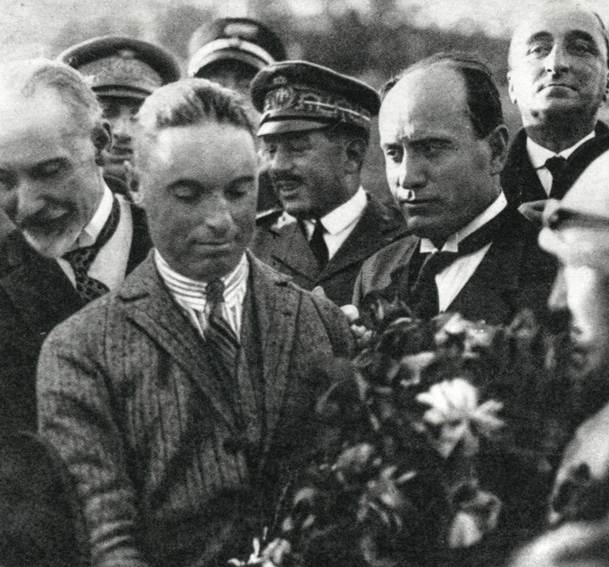
 On 7 November they landed in the Tiber at Rome, adjoining
the Porte Ripetta, acclaimed by the immense
multitude that crowded on the bridges and parapets and the stairs of an ancient
Roman Circus. The area is still referred to in
some tourist guides as ‘Scalo de Pinedo’ – Pinedo’s landing site.
On 7 November they landed in the Tiber at Rome, adjoining
the Porte Ripetta, acclaimed by the immense
multitude that crowded on the bridges and parapets and the stairs of an ancient
Roman Circus. The area is still referred to in
some tourist guides as ‘Scalo de Pinedo’ – Pinedo’s landing site.
 .
.
The 55,000-kilometer cruise was over. Mussolini and military and Government leaders gathered at the landing site to recognise the aviators’ great feat and to bask in the reflected glory.
The Fédération Aéronautique Internationale gave Pinedo its highest award, the FAI Gold Air Medal, for the flight, the first time it had awarded the medal.
He received many other Italian and international accolades, but according to those who knew him, remained unaffected by all this attention. He is remembered as being polite to all, never pushing himself forward.
End of the story
 Francesco’s
next venture, enthusiastically supported by Mussolini and the new air minister,
Italo Balbo, was a ‘four continents’ flight -across the
South Atlantic Ocean, extensive exploration of South America, a tour of
the USA and a return to Italy across the North Atlantic. This was another
magnificent flight that cannot be further described in this small book.
Pictured is his Savoia S55.
Francesco’s
next venture, enthusiastically supported by Mussolini and the new air minister,
Italo Balbo, was a ‘four continents’ flight -across the
South Atlantic Ocean, extensive exploration of South America, a tour of
the USA and a return to Italy across the North Atlantic. This was another
magnificent flight that cannot be further described in this small book.
Pictured is his Savoia S55.
In brief, after this, Francesco’s star quality seems to lose its lustre. Italo Balbo, a committed Fascist, led spectacular formation flights – 12 planes to Brazil in 1931 and 25 aircraft to Chicago in mid-1934. Balbo had a spectacular career in Fascist Italy and was accidentally killed over Tobruk on 28 June 1940 when his aircraft was shot down by Italian anti-aircraft fire.
Francesco was killed on 2 September 1933 when he attempted
to take off in an American Bellanca aircraft (right) to 
make a non-stop flight to Baghdad. The overloaded aircraft crashed and
immediately exploded.
Epilogue: a World War II episode.

The original caption for these photographs, taken by Laurence Le
Guay, Australian war photographer: Ground crew members of No. 3
Squadron RAAF, made an interesting find at Guidonia, Italy, when they arrived
at an airfield near Rome. The SIAI S.16 amphibian (sic) 
aircraft which they were examining, had an RAAF badge emblazoned on its
fuselage and the inscription "Pt. Cook" beneath it. Their amazement
was complete until an Italian explained that the SIAI had been flown out to
Australia in 1925 by Italian pilot Di (sic) Pinedo. Unfortunately, there is
no later record of this aircraft,
Appendix: de Pinedo’s philately
 From his later exploits,
there is an amazing philatelic product. This Newfoundland stamp
overprinted for his transatlantic flight sold for $USD45,000 on January 31,
2014.
From his later exploits,
there is an amazing philatelic product. This Newfoundland stamp
overprinted for his transatlantic flight sold for $USD45,000 on January 31,
2014.
A block of 4 of these stamps is on offer at over €100,000, the exact price to be negotiated. Even forgeries of this stamp sell for around $USD70.


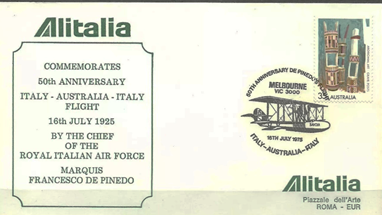
More affordable: There are many 50th anniversary ‘covers’ available
for around $AUD10. Alitalia produced a souvenir envelope available at a similar
price (below)
Other countries produced celebratory issues for the 50th anniversary – the
postage stamp on the left is from Monaco. Many other items are available on
eBay and specialist stamp collector sites. So far there are no plans for
celebratory issues for the centenary of the 1925 flight.
About this book
Anyone who reads about early Australian aviation history encounters the name of Francesco de Pinedo. The National Library of Australia’s wonderful Trove archive lists 2,184 articles in Australian newspapers about his exploits during 1925, and this little booklet is an attempt to tell his amazing story. His flight to Australia and Japan and return to Italy is not just an aviation adventure, but a valuable insight into the global history of the time and also of Australian social history. As mentioned on page 1, Un volo di 55.000 chilometri, 1927 Francesco’s own account of the journey, has been the main source for this booklet, but by no means is it the only source.
John Scott, of the Aviation Historical Society of Australia (NSW) has provided many valuable insights and especially emphasised the wider aspects of this flight, for which I am very appreciative. He is also an expert in commemorative philately. Bob Livingstone, of AHSA Queensland is well known for his aviation historical work, indispensable for people interested in the World War II air war in the Pacific. For my little booklets, he contributes especially his work in enhancing the illustrations, many of which were of very poor quality. Robert Gavagna of Pyrmont has given encouragement, proofreading and advice on Italian culture that has been very useful.
All the images are out of copyright, but that does not mean that they are not appreciated. Similarly, in a publication of this size, it is difficult to give proper references. I am happy to give references for all assertions in this book, and even happier to receive corrections and additional information which I will endeavour to add to the online collections. Among the sources, both for text and illustrations that I have used so far include
NLA, The South Australian Museum, www.idrovolanteedizioni.com, The Industrial History of Hong Kong Group, Museo Della Aeronautica Gianni Caproni, State Library of Queensland, www.italystl.com/pride/page9.htm, "Pinedo's Big Flight". Flight International. February 17, 1927, https://arc.aiaa.org/, AIAA Aerospace https://arc.aiaa.org/doi/10.2514/6.2024-2002, https://www.debeeson.com/untoldstory/francisco_de_pinedo.htm https://www.earlyaviators.com/epinedo.htm, https://www.historynet.com/lord-of-the-distances-francesco-de-pinedo/, https://www.italiausa.com, and academic work such as that of Christopher Lee and Claire Kennedy of Griffith University and Alberto Cauli, University of Aukland. And, as usual, Neville Parnell and Trevor Boughton’s 1988 book Flypast provides an essential underpinning of basic facts about Australian aviation. tl, 8/4/25