A wander through the collection – written before the destruction of the Ultimo display
Introduction
Aircraft are more than just technical achievements: they are the products of enthusiasm and creativity that is characteristic of humankind. Some aircraft are on display at the Powerhouse campus of the Sydney Museum of Applied Arts and Sciences, Australia’s only museum dedicated to celebrating the interface between the applied arts and sciences. Others are on display or in storage at the Castle Hill Museums Discovery Centre, and sometimes long term loans are made to other sites.
I hope this little booklet captures something of the creative excitement that is embodied in this collection.
Because of its size, this booklet is light on facts and figures, which are easy to find in this age where almost everyone carries a wonderful research facility in their pocket. The aim is just to give an overview, to remind people of the collection contents.
It is not a large collection: it is very eclectic. These are is not problems: the mission of the museum is more to inspire creative curiosity than to be comprehensive in every regard. The spectacular display at Ultimo is a world treasure that provides all visitors with lasting memories, and the MDC display is a great backup.
Obviously, input from the online MAAS catalogue notes is vital, but thanks must mainly go to many other sources, notably the online data bases such as Geoff Goodall’s Aviation History Site, David Eyre’s Encyclopedia of Aircraft in Australia and New Zealand, and ADF-SERIALS, recording the aircraft of Australia’s military services. Parnell and Boughton’s Flypast is vital, and Trove has made newspaper resources easily available for the lucky researchers of recent years.
Particular thanks must go to former curator (Aviation and Maritime) Debenham OAM, who has happily responded to numerous questions as I tried to ensure reasonable accuracy, and to Bob Livingstone for many other suggestions and corrections.
Thank you for reading my booklet, and please visit and enjoy this wonderful collection. Tom Lockley
Ultralights: #1 Wheeler Scout cat no 85/1586
#3 Kimberley Sky Rider cat no 89/501-1
#4 Bedson Resurgam cat no 2008/4/1
#5 CFM Shadow ‘Dalgety Flyer’ cat no 89/262-1
#6 Clancy Skybaby cat no 87/510-1
#7 Eagle-X aircraft prototype cat no L2056
Less known #1: Todhunter Skycycle cat no 86/79
#2 ‘Twin Plank’ sailplane cat no B2422
#3 Human Powered Helicopter cat no 87/753
#4 Celio 4 glider cat no 87/709
#6 Yeoman Cropmaster (uncatalogued)
De Havilland and Australia: Cirrus Moth DH60X cat no B1571
Australian enterprise: #1 Genairco biplane cat no 2007/143/1
#2 Transavia Airtruk cat no 89/1451
Rotary wings #1: Cierva Autogiro cat no B2361
#2 Bell Jetranger III cat no 90-816
Health from the air: Introduction
#3 Beechcraft Queen Air air ambulance 85/2551
The mighty Catalina cat no 85/2551
Blériot XI monoplane cat no L611
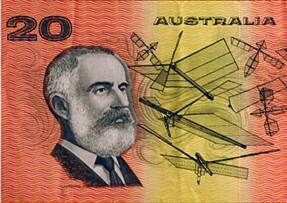 The Hargrave
collection
The Hargrave
collection
In a format of this size, it is absolutely impossible to do justice to the work of pioneer aviator Lawrence Hargrave., to say nothing of his work in other fields: he was a true ‘Renaissance Man’, who, above all, shared his work generously throughout the world. All that can be done is to mention a few aspects of his work to remind ourselves of his genius.
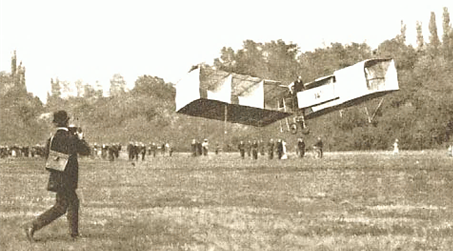 Michael Adams’ biography Wind Beneath his Wings demonstrates
his contribution to early flight. Wilbur Wright acknowledged the significance
of five pioneers towards the ultimate development of powered flight, one of
whom was Lawrence Hargrave. Alexander Graham Bell, better known as the
invertor of the telephone, visited Sydney in 1911 and made similar comments. Hargrave
corresponded often with French-American engineer Octave Chanute, whose biplane
glider inspired the form of the Wright Brothers 1903 aircraft. Alberto Santos
Dumont’s 14-bis, (above)the first European Aeroplane to fly, (23 October
1906) was virtually a collection of Hargrave-type box kites. Gabriel Voisin’s
aircraft, the first commercially available aircraft (worldwide) was also based
on box kites. Box kites can be seen in the Wran Building supporting Hargrave as
he floats through this iconic museum space.
Michael Adams’ biography Wind Beneath his Wings demonstrates
his contribution to early flight. Wilbur Wright acknowledged the significance
of five pioneers towards the ultimate development of powered flight, one of
whom was Lawrence Hargrave. Alexander Graham Bell, better known as the
invertor of the telephone, visited Sydney in 1911 and made similar comments. Hargrave
corresponded often with French-American engineer Octave Chanute, whose biplane
glider inspired the form of the Wright Brothers 1903 aircraft. Alberto Santos
Dumont’s 14-bis, (above)the first European Aeroplane to fly, (23 October
1906) was virtually a collection of Hargrave-type box kites. Gabriel Voisin’s
aircraft, the first commercially available aircraft (worldwide) was also based
on box kites. Box kites can be seen in the Wran Building supporting Hargrave as
he floats through this iconic museum space.
His successful use of box kites to lift a person from the ground was in November 1894 at Stanwell Park, south of Sydney, where he lived and worked until 1899, achieving his most significant discoveries. He was able to finance his work from profits from his family’s mining ventures.
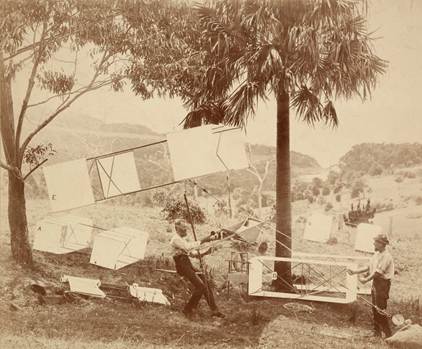
He was also a world pioneer in the study and use of airfoils, basic shapes that
generate lift and enable aircraft to ascend.
On his death, some of his works and the records of his research were almost lost forever, but fortunately MAAS museum has acquired a wonderful collection, including, almost at random:.
A mechanical calculating machine
|
|
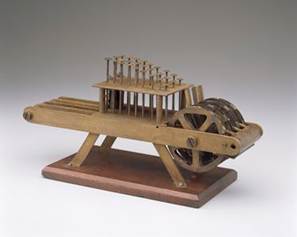
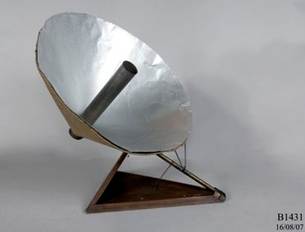
A solar heater
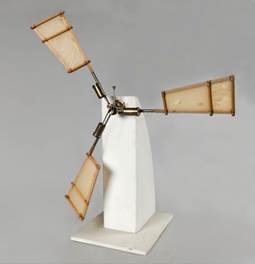
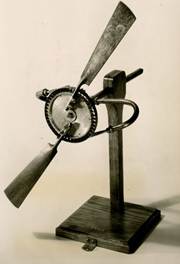 Rotary
engine modelsdeveloped by Hargraves. Rotary engines were widely used until
about 1920. Left: an aero engine driven by steam power. Hargraves was
handicapped by not having a suitable engine. Below left: a mechanical
calculating machine; right a solar heater.
Rotary
engine modelsdeveloped by Hargraves. Rotary engines were widely used until
about 1920. Left: an aero engine driven by steam power. Hargraves was
handicapped by not having a suitable engine. Below left: a mechanical
calculating machine; right a solar heater.
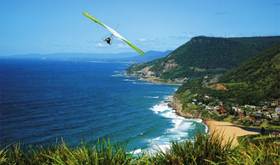 Australia was a leader in the
field of hang gliders after World War II – and, indeed Stanwell Park remains a
popular place for this sport. But the problem is that after flying from the top
of a hill it is always necessary to carry the kite back up the hill to fly
again. The solution, to the Australian mind, was simple: put an engine in the
kite. The Museum’s aircraft trace the evolution of this idea. Australia was the
first country in the world to create suitable regulations for this class of
aircraft – Air Navigation Order 95-10.
Australia was a leader in the
field of hang gliders after World War II – and, indeed Stanwell Park remains a
popular place for this sport. But the problem is that after flying from the top
of a hill it is always necessary to carry the kite back up the hill to fly
again. The solution, to the Australian mind, was simple: put an engine in the
kite. The Museum’s aircraft trace the evolution of this idea. Australia was the
first country in the world to create suitable regulations for this class of
aircraft – Air Navigation Order 95-10.
The Aircraft collection
Ultralights: #1 Wheeler Scout cat no 85/1586
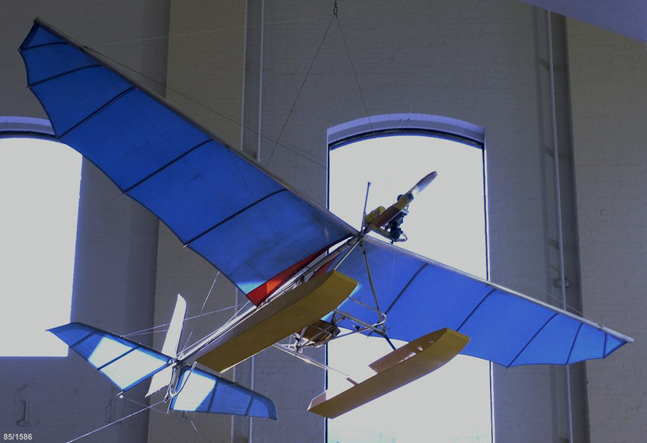 The
Wheeler Scout (made 1976-78) can be carried on a car roof rack, weighing only
50 kg. It could take off from still water when fitted with the floats as shown.
Most importantly, it was inexpensive.
The
Wheeler Scout (made 1976-78) can be carried on a car roof rack, weighing only
50 kg. It could take off from still water when fitted with the floats as shown.
Most importantly, it was inexpensive.
There was a basically orthodox joystick and rudder bar control, but only to tailplane elevators and rudder. Power came from a modified Victa lawnmower engine, which was called a ‘Pixie 136’, about 12 hp, 9 kW.
#2 STOLaero cat no B2527
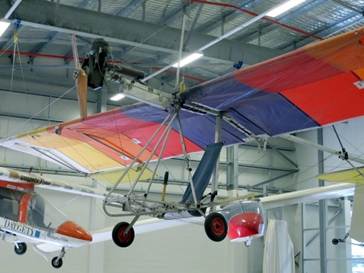 ANO 95 covered powered aircraft with a maximum takeoff
weight of 400lb (182 kg) and a maximum wing loading at 4 lbs per sqare foot
(19.5 kg/m2). This allowed for more sophisticated aircraft than the
very basic ‘Scout’ such as the STOLaero. I had ailerons as well as elevator and
rudder controls. It has a 25 hp, 18kW two stroke alloy engine. It was designed
and manufactured by Australian engineer Steve Cohen at Kirrawee, Sydney during
the period 1975-80.
ANO 95 covered powered aircraft with a maximum takeoff
weight of 400lb (182 kg) and a maximum wing loading at 4 lbs per sqare foot
(19.5 kg/m2). This allowed for more sophisticated aircraft than the
very basic ‘Scout’ such as the STOLaero. I had ailerons as well as elevator and
rudder controls. It has a 25 hp, 18kW two stroke alloy engine. It was designed
and manufactured by Australian engineer Steve Cohen at Kirrawee, Sydney during
the period 1975-80.
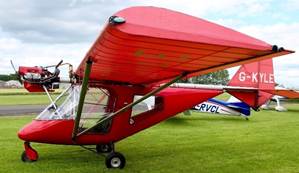 Steve
Cohen continued to develop his ideas and the ‘Thruster’,(left), quite an
advanced Ultralight, first flew in 1982 and was manufactured in the UK. Another
version, the T600, was built in Orange, NSW.
Steve
Cohen continued to develop his ideas and the ‘Thruster’,(left), quite an
advanced Ultralight, first flew in 1982 and was manufactured in the UK. Another
version, the T600, was built in Orange, NSW.
#3 Kimberley Sky Rider cat no 89/501-1
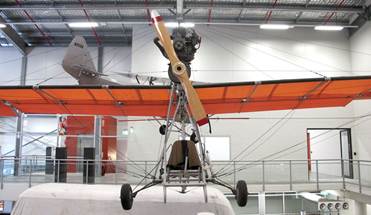 This,
again, was slightly more complex. It was designed by Qantas 747 pilot Gary
Kimberley. Flaps were added to the control surfaces, enabling better control at
landing, and again, the engine was more powerful. It was flown and exhibited at
the 1978 Schofields Air Show.
This,
again, was slightly more complex. It was designed by Qantas 747 pilot Gary
Kimberley. Flaps were added to the control surfaces, enabling better control at
landing, and again, the engine was more powerful. It was flown and exhibited at
the 1978 Schofields Air Show.
Gary Kimberley made plans available throughout the world and, thus ‘Sky-Riders’ have appeared in a number of countries. In 1978 the Experimental Aircraft Association n the United States recognised the aircraft with an 'Outstanding Individual Achievement Award'. It was listed in Janes All the World's Aircraft.
#4 Bedson Resurgam cat no 2008/4/1
Gordon Bedson, (1918-1984) designer of the Resurgam, is an interesting character deserving of more attention. He was a noted automobile designer who emigrated to Australia to work on the Lightburn Zeta minicar project. He had an amazing and varied career. He remained in Australia and in 1979, living at the Northern Tablelands township of Bundarra, where he built an ultralight that was quite successful: In 1982 it won a race from Biggin Hill, Kent, to Paris. Several were built in various forms and Bedson was killed in a test flight of a two-seater version. MAAS museum has an incomplete example of the Resurgam but no photo of this is available.
#5 CFM Shadow ‘Dalgety Flyer’ cat no 89/262-1
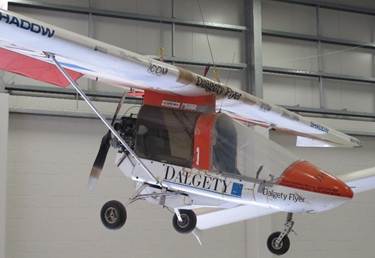 This English Ultralight gains its place in the museum by
virtue of a remarkable flight from London to Sydney, 2 December 1987 to 29
January 1988, as Bicentennial celebrations were under way.
This English Ultralight gains its place in the museum by
virtue of a remarkable flight from London to Sydney, 2 December 1987 to 29
January 1988, as Bicentennial celebrations were under way.
This was, at the time, the longest and fastest ultralight flight in history. The pilot was Brian Milton, a British TV presenter and hang glider pilot. He was sponsored by Dalgetys, an agribusiness firm with long ties to Australia. It had a 41.5 hp, 31 kW Rotax engine and had an endurance of up to 9 hours at over 100 km/hr.
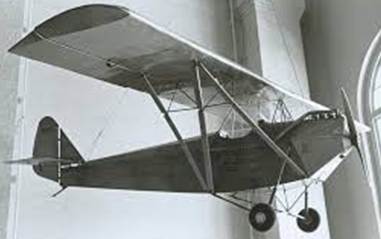 #6 Clancy Skybaby cat no 87/510-1
The idea of ultralight aircraft is, of course, not new. Particularly during the late 1920s and 1930s attempts were made in various countries to produce a lightweight affordable aircraft.
The Clancy Skybaby was designed and built by the three Clancy brothers William, Jack and Alan at Rosebery, Sydney, first flying in 1931. It was a single-seat parasol wing aircraft, a typical configuration for similar aircraft built overseas at this time. The aircraft was made of wood, covered by linen, as lightly as possible – the bare fuselage weighed only 16 pounds, 7.5 kg.
Engines were a problem in Australia: air-cooled motorcycle engines provided good power for their weight, but even these were not powerful enough, so a basic 4-cylinder Henderson motorcycle engine was modified by being converted from side valve to overhead valve configuration, with new finned bronze cylinder heads to improve cooling. A dual ignition system was fitted, with other ‘tweaks’ to increase power. It delivered 38 horsepower, (28 kW), a 50% increase with very little extra weight. The construction of the engine was a remarkable feat: parts were manufactured or adapted from other sources, the propeller hub being a turned down Model T rear wheel hub.
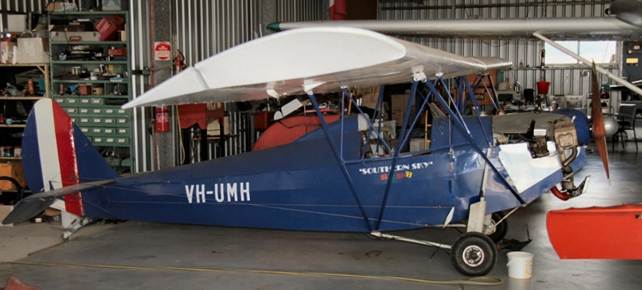 According
to historian David Eyre, five Skybabys still exist. The museum’s Skybaby
(pictured) came from a very interesting source. Some enthusiasts from Michigan,
USA had read details of the Skybaby and decided to build one. It was actually
completed in 1980 and had US registration N211SB.
According
to historian David Eyre, five Skybabys still exist. The museum’s Skybaby
(pictured) came from a very interesting source. Some enthusiasts from Michigan,
USA had read details of the Skybaby and decided to build one. It was actually
completed in 1980 and had US registration N211SB.
It was equipped with an original Henderson engine supplied by Jack Clancy, and in 1987 it was presented to the Powerhouse Museum.
Another Skybaby, VH-MUH was fully registered until quite recently, privately owned. The clearly visible wing section – a Gottingen 426 airfoil – shows how the thick wing provided maximum lift.
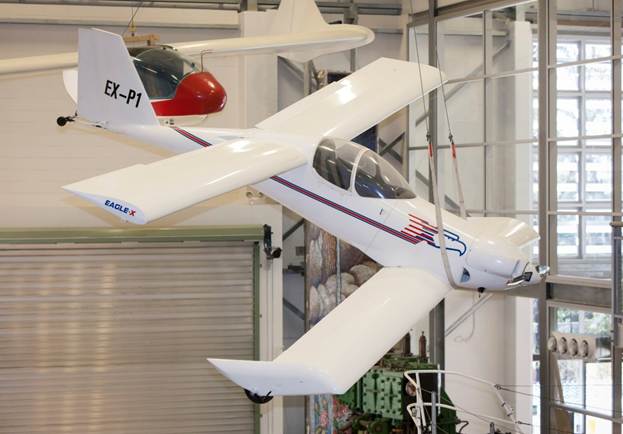 #7
Eagle-X aircraft prototype cat no L2056
#7
Eagle-X aircraft prototype cat no L2056
This aircraft was intended to be the prototype for a single seater recreational aircraft that might be used for such purposes as mustering cattle. It flew well, the canard double wing arrangement making it very stable and hard to stall. Despite a setback of a forced landing in a wheat field in Western Australia in January 1985, in 1987 it was awarded The Australian Financial Review - AMEV Finance Ltd new product award. ($25,000). The aircraft did not go into production, and the prototype was acquired by the museum in November 1997. It is on display at Castle Hill. Its Rotax engine delivered 50 bhp, 37 kW.
Eagle Aircraft entered liquidation in 1989 and was purchased by he Malaysian organisation Composites Technology Research Malaysia.
About 20 two-seater Eagle 150s were constructed, co-produced in Australia and Malaysia about 1995 to 2000. Three variants were available: pastoral with robust interior, basic instrumentation and large tyres for rough fields; trainer for aeroclub use; and sport/executive for recreational and business use.
About 8 remain in Australia and a few more in New Zealand.
Less known #1: Todhunter Skycycle cat no 86/79
 This
section deals with six very interesting aircraft.
This
section deals with six very interesting aircraft.
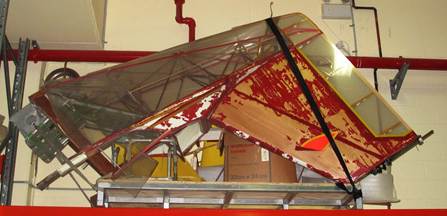
The dream of man-powered flight persists from ancient times, and during the 1960s and 1970s there was world-wide interest in aircraft powered by human muscle, partly in response to prizes offered by British industrialist Henry Kremer. The museum has one of the major Australian attempts, the 'Todhunter Skycycle', built by Reg and Ernie Todhunter of Condell Park, NSW. Work continued on the project from 1970 to 1977. It is rather damaged and is stored at Castle Hill.
#2 ‘Twin Plank’ sailplane cat no B2422
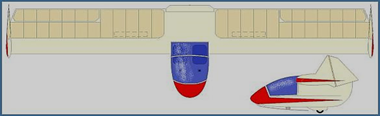 Reg Todhunter was also the originator of the ‘Twin Plank’
tailless glider on display at MDC. It is based on a US design known as EPB,
after the designers Easley, Powell and Backstrom, and about 16 have been built
worldwide. The idea is simple: maximise the lift area and minimise the weight. Our
example was built at Bankstown, NSW, by Glidair Sailplanes, the first firm in
Sydney to solely build and repair sailplanes. Todhunter was assisted by Stephen
Marton, Milton Lalas and Al Backstrom. Reg successfully flew it in 1958 and by
1967 it became the first tail-less glider to receive an Australian Certificate
of Airworthiness.
Reg Todhunter was also the originator of the ‘Twin Plank’
tailless glider on display at MDC. It is based on a US design known as EPB,
after the designers Easley, Powell and Backstrom, and about 16 have been built
worldwide. The idea is simple: maximise the lift area and minimise the weight. Our
example was built at Bankstown, NSW, by Glidair Sailplanes, the first firm in
Sydney to solely build and repair sailplanes. Todhunter was assisted by Stephen
Marton, Milton Lalas and Al Backstrom. Reg successfully flew it in 1958 and by
1967 it became the first tail-less glider to receive an Australian Certificate
of Airworthiness.
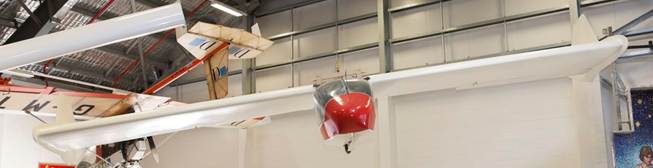
Bernard Duckworth, in Australian Gliding Museum Newsletter No. 38: December 2018, has written a comprehensive study of the Planks in Australia and their overall history. Planks did have an amazing glide ratio of 18:1, but they were not a success. The main reason for the abandonment of this idea seems to be the death of Guenter Tholl at Canberra on 31 March 1957 and another crash causing serious injury some time later. A major problem seems to have been difficulties with the centre of gravity, not surprising because of its short length. It deserves preservation because of its uniqueness and excellent workmanship using traditional wood structure with fabric covering.
#3 Human Powered Helicopter cat no 87/753
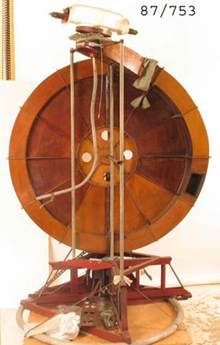 This
human-powered helicopter was designed by Hermes George Celio and made by him
and Patricia Bonham in his workshop in Systrum Lane, just near the Powerhouse
Museum, during the 1950s. Beautifully made of plywood, it weighs just over 45 kg.
The pilot used a treadle to revolve an impeller that produced an air current
that was fed to the rotor tips where it pushed the rotor around. The rotor
blades were three metres long, and Cielo calculated that if he could make the
rotors revolve at 200 rpm it would fly. It was claimed that it rose from the
floor in the workshop, but it did not succeed in competing for the big prizes
then on offer for aircraft that flew by human power.
This
human-powered helicopter was designed by Hermes George Celio and made by him
and Patricia Bonham in his workshop in Systrum Lane, just near the Powerhouse
Museum, during the 1950s. Beautifully made of plywood, it weighs just over 45 kg.
The pilot used a treadle to revolve an impeller that produced an air current
that was fed to the rotor tips where it pushed the rotor around. The rotor
blades were three metres long, and Cielo calculated that if he could make the
rotors revolve at 200 rpm it would fly. It was claimed that it rose from the
floor in the workshop, but it did not succeed in competing for the big prizes
then on offer for aircraft that flew by human power.
It deserves preservation because of its workmanship and as an example of individual dedication to the idea of human-powered flight. Hermes had a wide range of similar interests!
#4 Celio 4 glider cat no 87/709
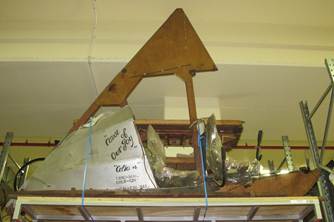 Perhaps
the cheapest way of getting into the air was by a winch- launched glider, with
which Hermes had had experience in Europe before World War II. A glider which
he produced in 1954 is part of the MAAS collection. Unusually, it was a two seat
aircraft, with the instructor occupying a seat behind the student. It was used
at Schofields, near Penrith, in the 1950s; descriptions exist of it being
pulled into the air by a cable pulled by the elevated rear wheel of a 1926
Hupmobile motor car. By this means it could reach 400 feet altitude and
complete a circuit before landing. Its glide ratio was about 1 in 12. It was
damaged by being hit by a car and has not flown since and was acquired by the
museum in 1987.
Perhaps
the cheapest way of getting into the air was by a winch- launched glider, with
which Hermes had had experience in Europe before World War II. A glider which
he produced in 1954 is part of the MAAS collection. Unusually, it was a two seat
aircraft, with the instructor occupying a seat behind the student. It was used
at Schofields, near Penrith, in the 1950s; descriptions exist of it being
pulled into the air by a cable pulled by the elevated rear wheel of a 1926
Hupmobile motor car. By this means it could reach 400 feet altitude and
complete a circuit before landing. Its glide ratio was about 1 in 12. It was
damaged by being hit by a car and has not flown since and was acquired by the
museum in 1987.
#5 The Butler Bat ABA-2
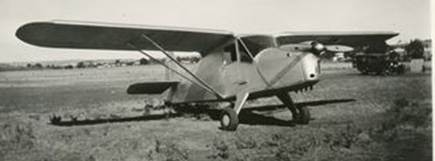 Arthur
Butler (1902-1980) is a legendary figure in Australian aviation history, with
far too long a story to cover here. His amazing initiatives as pioneer and air
line owner included the construction of this rather elegant aircraft, built in
his Cootamundra workshops in 1937. After the war it was sold to war hero Robert
H ‘Bobby’ Gibbes (of Gibbes Sepik Airways) who used it in Australia and New
Guinea. In 1948 it was resold and eventually dismantled and stored, and suffered
major damage in a bushfire at Oberon. Eventually the remains came to the
museum, where it is listed as ‘Aircraft, full size’. No pictures are available,
but the remains are certainly well worth preserving as a reminder of this
remarkable person.
Arthur
Butler (1902-1980) is a legendary figure in Australian aviation history, with
far too long a story to cover here. His amazing initiatives as pioneer and air
line owner included the construction of this rather elegant aircraft, built in
his Cootamundra workshops in 1937. After the war it was sold to war hero Robert
H ‘Bobby’ Gibbes (of Gibbes Sepik Airways) who used it in Australia and New
Guinea. In 1948 it was resold and eventually dismantled and stored, and suffered
major damage in a bushfire at Oberon. Eventually the remains came to the
museum, where it is listed as ‘Aircraft, full size’. No pictures are available,
but the remains are certainly well worth preserving as a reminder of this
remarkable person.
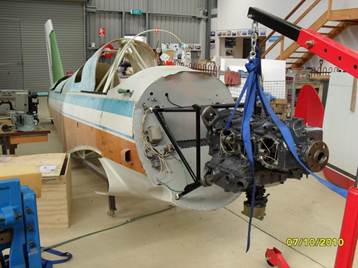 #6 Yeoman Cropmaster (uncatalogued)
The museum has a Cropmaster, undergoing restoration. About 20 of these agricultural aircraft were made at Bankstown during the years 1960-66. They used many parts from the Australian-designed and built Wackett Trainer of World War II. An excellent example of ‘swords into ploughshares’!
De Havilland and Australia: Cirrus Moth DH60X cat no B1571
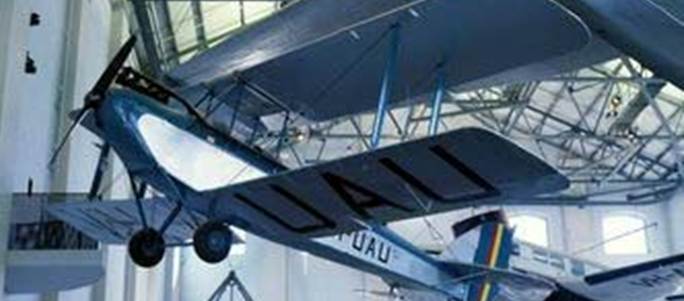
The DH-60 was used for basic training both within the RAAF and in civilian aero
clubs, and others were imported privately. The Government paid a bounty to the aero
clubs for each pilot they trained who gained a licence, so that there would be
a supply of pilots for times of war. VH-UAU was received by the RAAF as A7-13,
the 13th of a total of about 69 delivered between 1926 and 1936. It became a
seaplane training aircraft at Point Cook. It passed to the care of the
Tasmanian Aero Club in 1932, registered as VH-UAU. By 1937 it had been
superseded, and its C of A lapsed. This probably saved it from being reacquired
by the RAAF wen war broke out. It was used rarely during and after the war,
usually from isolated rural airstrips, and after 1951 was stored in a shed at a
farm in Deniliquin. The famous Norm Harwood acquired it for the museum in 1964.
It was restored to original condition between 1982 and 1983 by museum employees
and has been on display in the Transport Hall from the beginning of the
Powerhouse Museum.
Geoffrey de Havilland,(1882-1963, was a brilliant British aircraft designer whose career extended from World War I to the jet age. His early aircraft – nicely streamlined for their times – can be distinguished by their rudders, which have a smooth ‘butterfly wing’ shape, and his choice of variations of the ‘moth’ name is another indication of his interest in lepidoptery.
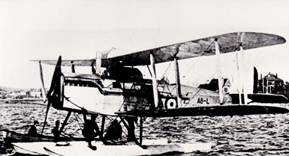
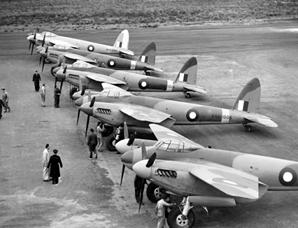
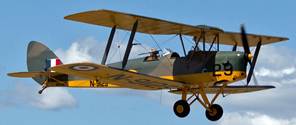
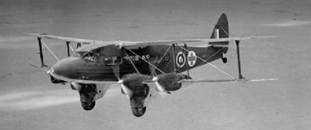
Below are listed some of the aircraft that have had major Australian connections indicates something of the remarkable influence that his aircraft had on Australia. The DH-4 and DH-9 aircraft were precursors of such aircraft as the four-passenger DH-50, 16 of which were actually built in Australia.
Also, in the 1920s DH began to build light aircraft, less than half the unladen weight of the DH-9 with correspondingly smaller engines. The first really successful of these was the DH-60, weighing about half a tonne. These replaced the wartime Avro 504s and Curtis JN-4D ‘Jennies’ as basic trainers, and were far more stable and easier to fly. Over the period 1925-35 nearly 1200 were made, in various versions, and about 166 of these were used in Australia, including 32 built by Larkin aircraft in Melbourne.
Though it is hard to believe, they were capable aircraft for long-distance flights, and famous aviators such as the Australian Lores Bonney, Francis Chichester, Amy Johnson and CWA Scott flew routes such as England to Australia, continually lowering the record.
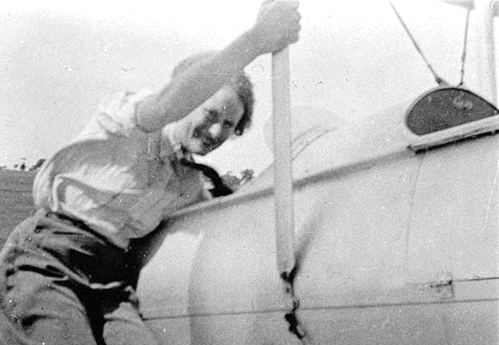 Nancy
Bird established a commercial operation in her DH-60G. She moved on to the larger
Leopard Moth after she began to fly the baby health nurse around north west New
South Wales. Sydney’s new airport at Badgery’s Creek has been named in
her honour.
Nancy
Bird established a commercial operation in her DH-60G. She moved on to the larger
Leopard Moth after she began to fly the baby health nurse around north west New
South Wales. Sydney’s new airport at Badgery’s Creek has been named in
her honour.
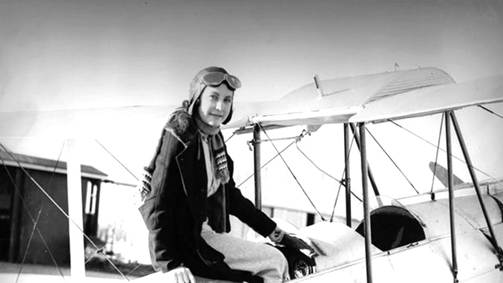 In 1933 Lores Bonney was the first woman to fly solo
from Australia to Britain
In 1933 Lores Bonney was the first woman to fly solo
from Australia to Britain
De Havilland aircraft in Australia: a few examples
|
|
|
First
flying doctor, DH-50, Cloncurry, 1928 |
|
|
|
|
|
DH-94
aerial ambulance, flew to Africa 1940 |
|
There are still 274 de Havilland arcraft registered in Australia 67 years after the company ceased business. |
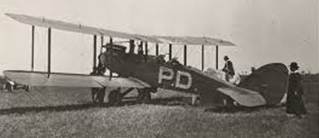
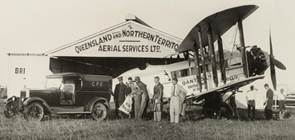
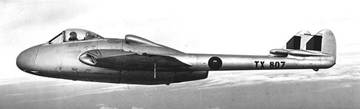
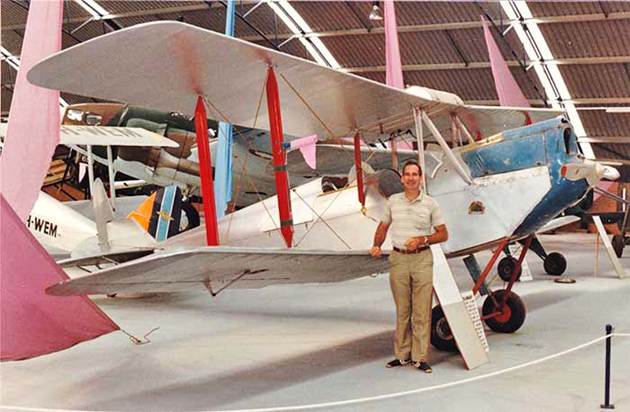
Australian enterprise: #1 Genairco cat no 2007/143/1
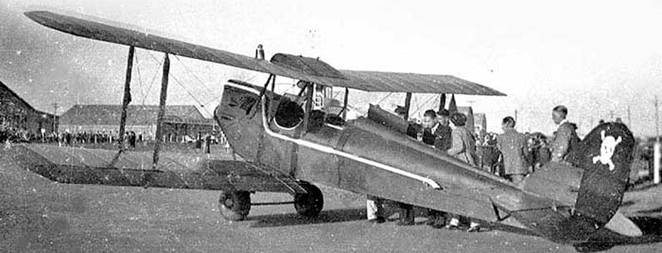
Pilots Albert Royal and ‘Jerry’ Pentland, with engineer George Beohm, formed
the General Aircraft Company (Genairco) with a capital of £10,000, at Mascot in
early 1929. They mainly performed maintenance for private operators and the
RAAF. They worked on the Southern Cross, rebuilt six DH-60s for the RAAF. They
also bult two DH-60s from scratch.
But from the outset
they intended to meet a particular need: a ‘three-seater of the Moth type’.
Flying in DH-60s in New Guinea, Beohm had been frustrated by its narrow
fuselage – ‘not wide enough to fit a box of biscuits’. Also, a two-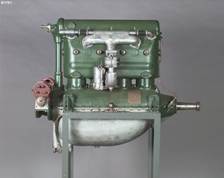 passenger
aircraft held out the prospect of doubling income from joy flights and
charters.
passenger
aircraft held out the prospect of doubling income from joy flights and
charters.
The fuselage was a ‘fattened’ – sone said ‘pregnant’ – Moth design. The wings resembled those of the Avro Avian, competitor of the Moth, and the first aircraft flew by the end of the year. Ten aircraft were built, and they were widely used. Just about every famous Australian airman of the time flew a Genairco at some time, even if only for a test flight. It was a great engineering feat.
But the sixth Genairco had an even more interesting story. For the first three months, it was the flying test bed for the Harkness-Hornet aero engine, built in Sydney by the Harkness and Hillier company, which also made the Australian Six automobile Both were brave adventures in Australian manufacturing. The automobile performed well, but because of lack of economies of scale, could not compete with overseas-made vehicles, and though the aero engine was well designed and reliable, it was too heavy for its power output.
VH-UOG was re-engined with a 130 horsepower DH Gipsy II engine and had a chequered early career including a bad crash at Bourke. In October 1935 it was acquired by Dr T J Henry of Sydney. The pilot was his son, Goya Henry, who was already well known as a reckless airman: he had an artificial leg as the result of a crash in a Junkers Junior aircraft in July 1930, caused by flying in appalling weather. Goya – named by his father after the famous Spanish painter – named the aircraft Jolly Roger, and painted it red with a skull and crossbones on the rudder.
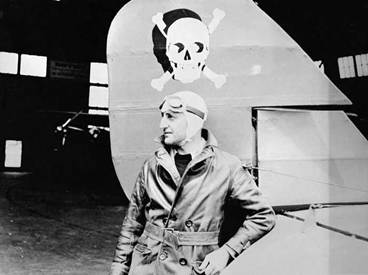 Over the years, he was constantly in the public eye.
He had 13 spectacular crashes or forced landings. His air display acts and
participation in air races were always adventurous and spectacular. He was
prominent in establishing aerial shark patrols and meteorological flights,
usually with maximum publicity. He sometimes flew with two large pet carpet
snakes in his cockpit. He was involved in social affairs, notably an attempted
coup at the Royal Aero club of NSW in 1935. In court appearances for drunk
diving, flying infringements and also for civil actions he was greatly
assisted by family legal experts, notably his brother Alfred Henry, MLA for
Clarence, and he often obtained acquittals on appeals to original guilty
findings. In 1936 it seems clear that he was the first pilot to fly (illegally)
under the newly built Sydney Harbour Bridge.
Over the years, he was constantly in the public eye.
He had 13 spectacular crashes or forced landings. His air display acts and
participation in air races were always adventurous and spectacular. He was
prominent in establishing aerial shark patrols and meteorological flights,
usually with maximum publicity. He sometimes flew with two large pet carpet
snakes in his cockpit. He was involved in social affairs, notably an attempted
coup at the Royal Aero club of NSW in 1935. In court appearances for drunk
diving, flying infringements and also for civil actions he was greatly
assisted by family legal experts, notably his brother Alfred Henry, MLA for
Clarence, and he often obtained acquittals on appeals to original guilty
findings. In 1936 it seems clear that he was the first pilot to fly (illegally)
under the newly built Sydney Harbour Bridge.
He had been reported for dangerous flying around Mascot airfield as early as September 1931, and a very complicated series of events ensued. He claimed that the Federal Government had no legal jurisdiction in civil aviaton matters, and ignored the legal actions. This matter was finally settled (after a Federal referendum was held and new laws were passed) in July 1938. Lawyers may read the implications in R V Burgess; Ex Parte Henry (1936).
By the time this was settled, Goya had other problems. His supportive solicitor brother Alfred was killed in a car crash in September 1938. In October 1938 Goya was made bankrupt after paying damages for a collision while taking off from Mascot. The bankruptcy was not discharged until September 1940. He tried to join the RAAF at the outset of he war but was not accepted. He joined the small ships unit of the United States Army in 1943. After the war he remained in New Guinea working as master of small ships, returning to Sydney in 1963. By this time he had lost touch with the flying world, and he died in 1974, not even having an obituary in the press.
Goya, meanwhile, had sold VH-UOG on 28 July 1945 for £390. It was repaired and used by various owners until it was stuck off the register in February 1952. Both VH-UOD and VH-UOG were in very poor condition when acquired by grazier Bill Campbell-Hicks of Tottenham, NSW. Joe Drage built new wings for VH-UOD and in return acquired VH-UOG which he restored.
It was displayed in Drage’s air museum at Wangaratta when it opened in 1984. The museum closed eventually in 2002 and the Genairco was purchased by Roy Fox. It was acquired for the MAAS collection on 1 July 2007 and is on display at MDC Castle Hill.
#2 Transavia Airtruk cat no 89/1451
In the period after World War II the generation and distribution of electricity was revolutionised. Instead of bringing coal to the major cities, where electricity was generated in large power stations such as that at Ultimo, the electricity was generated near the source of power, then reticulated through the state by a high-tension grid.
In 1956, Franco Belgiorno-Nettis, an Italian electrical engineer, came to Australia. Over the next few decades his company Transfield played a big part in this process.
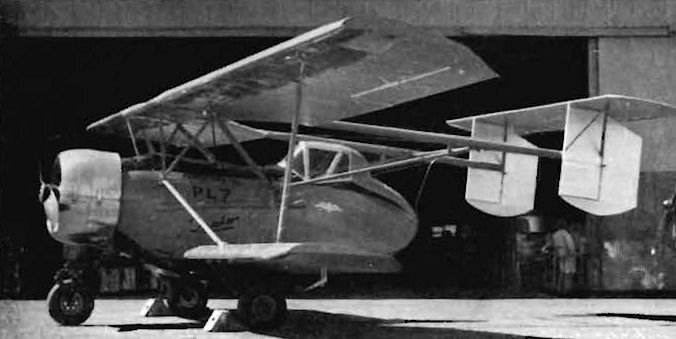 Another Italian had reached Australia in 1952. Luigi
Pellarini was an aircraft designer who had become famous for creating ‘flying
cars’ in post-war Italy.
Another Italian had reached Australia in 1952. Luigi
Pellarini was an aircraft designer who had become famous for creating ‘flying
cars’ in post-war Italy.
He soon began work on a new type of agricultural aircraft. In September 1955 the PL-7 (above) first flew, made by Kingsford-Smith Air Services at Bankstown. It had a war-surplus Cheetah engine as used in the Avro Anson. Its design was rugged, innovative and functional: the aircraft flew well, carried a good load, and above all could be quickly refilled with fertiliser in comparison with more orthodox aircraft.
This attracted the attention of ‘Snow’ Bennett, a New Zealander, who invited Pellarini to come to New Zealand and work on the idea. When ‘Snow’ bought a large quantity of war surplus Harvard trainers, Pellarini designed the PL-11, using as many Harvard parts as possible, and two aircraft were made, being the first modern commercial aircraft to be built in New Zealand, and the design worked well. But there was not enough money available to set up proper production.
At this stage Luigi Pellarini met Franco Belgiorno-Nettis who agreed to establish a factory in the outer Sydney suburb of Seven Hills to produce the PL-12 Airtruk. For the first time in this process, Luigi was not constrained by the need to use war-surplus parts, and a new variant was produced – the PL-12. The museum’s example is VH-TRN, the first PL-12 to be flown – at Bankstown airfield on 15 April 1965. Between then and when production finished in 1993, 117 aircraft had been made, some of which were air ambulances or transport aircraft. About 71% of the production was exported – largely to New Zealand but also to many other countries. Eight are sill registered in Australia, and there are other preserved examples in Denmark, New Zealand and Thailand.
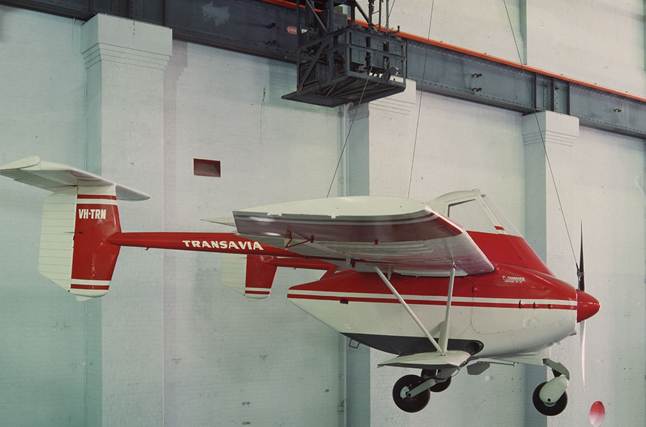
The Belgiorno-Nettis family and Transfield have been big supporters of MAAS
museum. They presented the aircraft to the museum in 1988 and until 2018 the
Airtruk was suspended from the roof of the Turbine Hall, when it was removed to
allow for the installation of a temporary artwork.
The Airtruk deserves its place in the museum because of its innovative design and because of unique design and its success as a aircraft designed and built in Australia and exported to other countries.
Rotary wings #1: Cierva Autogiro cat no B2361
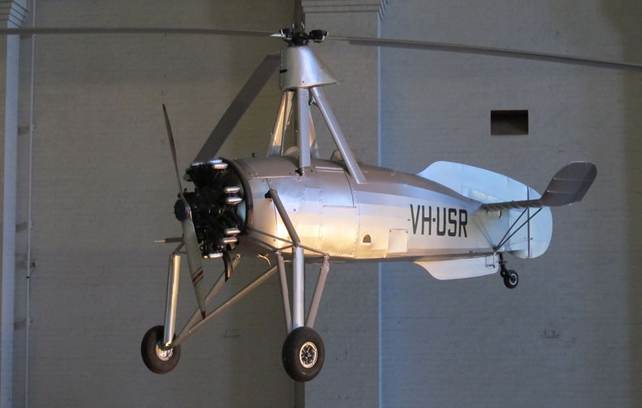
The museum’s Autogiro is a favourite of the Spanish Australian community. Its designer was Juan de la Cierva Cordorniu, (1895-1936) eldest son of a wealthy and distinguished Spanish family. In 1912 he began research into rotary winged aircraft, mainly for safety reasons: rotary winged aircraft would land safely if the engine failed. He made two vital discoveries: the need for the rotor blades to have an airfoil section and, most important, that if the rotor blades were connected to the rotating axle with hinges that allowed some horizontal and vertical movement, lift would be evenly generated. These ideas were essential to the success of autogyros and, indeed, helicopters.
He took his ideas to Britain in 1925, and in 1933 the C30 was announced, the first really successful autogyro. It featured steering by direct control of the rotor rather than by ailerons and rudder. Avro built 78 machines, some of which were exported, including four to Australia.
To fly an autogyro, power was first sent to the top rotor, causing huge vibration and noise! Then the power was transferred to the front propeller and the aircraft lurched into the air after a short take-off run. The C30 was then steered by a heavy control stick that hung down from the rotor and was relatively easy to direct.
Sun newspaper 13 June 1936; report of first flight in Australia.
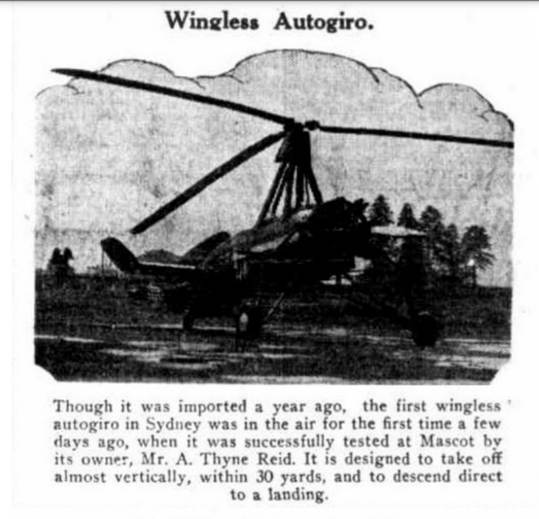 Four C30s came to Australia in the
mid-1930s. The surviving example, VH-USR, was imported in March 1935 by Andrew
Thyne Reid (1901-1964).
Four C30s came to Australia in the
mid-1930s. The surviving example, VH-USR, was imported in March 1935 by Andrew
Thyne Reid (1901-1964).
He thought that the autogiro might become the long sought for -flying car’. Its rotor blades, for example, could all be folded parallel to the fuselage so it could be parked in an ordinary domestic garage.
His aircraft first flew in Australia in June 1936. It created a sensation. He flew it to his relative’s property near Yass and to other country towns. He even commuted from his home in Thornleigh to Mascot in the autogyro.
During World War II VH-USR was used by the military for experimental purposes. It was returned to Thyne Reid after the war, but was not used a great deal: Thyne and his wife preferred to use their de Havilland Dragon aeroplane, bought 1945 and then a de Havilland Drover after January 1955.
The Reids were a wealthy and enterprising Australian family. In later life Thyne was very generous with his wealth: he and his wife had no children. For example, Sydney University’s veterinary science was well supported, and he gave money to CSIRO to help finance the Parkes radio telescope. VH-USR was donated to MAAS museum in 1980.
#2 Bell JetRanger III cat no 90-816
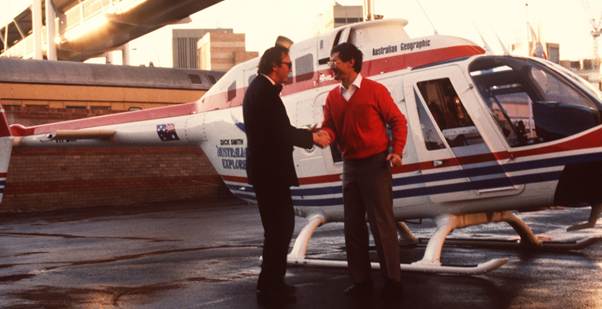
On 27 August 1990-Dick Smith flew his JetRanger Helicopter into the lower forecourt of the Powerhouse Museum to donate it to MAAS.
Dick Smith had established a chain of electronic stores which he sold in 1980 (at the age of 36) for about $25 million. He became an aviator, explorer and adventurer, his major feat being his ‘round the world’ solo helicopter flights. He chose to use a helicopter because of the suitability for film making and photography for his Australian Geographic magazine..
He began his flight from the Bell helicopter plant at Fort Worth, Texas, on Thursday, 5 August 1982. The first stage was USA to Canada, then on to Greenland and Iceland, battling, rain, fog, sleet, severe turbulence and extreme fatigue. He was also mysteriously shot at over Canada. By 18 August he had made the first solo helicopter flight over the North Atlantic. He landed on the golf course at Balmoral Castle in Scotland, fifty years to the day after James Mollison had made the first solo east-west crossing of the Atlantic in a fixed wing aircraft. He flew on to London. This stage of 11,752 km was covered in 60 hours 52 minutes spread over 11 days averaging 104 knots (192 km/hr). During the three-week stay in London the helicopter was serviced and put-on display at the Farnborough air show.
The second
stage was London to Sydney, beginning on Monday 13 September 1982. He planned
to emulate the 1928 solo flight of the great Australian aviator Bert Hinkler
and reach Darwin in 15 days. He achieved this, despite the problems of flying through
the tropics in a helicopter. He landed at Darwin on the appropriate day, and
flew on to Sydney. En route, he called at Hinkler’s hometown of Bundaberg, one
of many tributes made 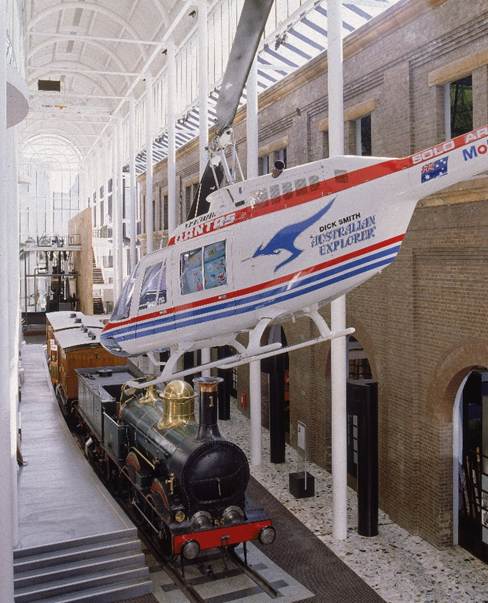 to
famous airmen over the whole flight. On his arrival at Sydney on October 2, he
was given special permission to fly under the Harbour Bridge and landed at the
Darling Harbour heliport. This ended the second leg of his journey in which he
had covered a total of over 30,000 km.
to
famous airmen over the whole flight. On his arrival at Sydney on October 2, he
was given special permission to fly under the Harbour Bridge and landed at the
Darling Harbour heliport. This ended the second leg of his journey in which he
had covered a total of over 30,000 km.
On 25 May 1983, after the northern winter was over, the third leg began. He flew to Japan, then had to refuel on the deck of a bulk carrier midway between Japan and the Aleutian Islands. From there he flew back to Fort Worth, arriving on Friday, 22 July 1983, becoming the first person to fly solo around the world in a helicopter.
He made other successful flights, including a solo flight in the helicopter to the North Pole, landing on 28 April 1987, finally succeeding on his third attempt over 12 months before presenting the helicopter to MAAS museum.
The helicopter is a permanent feature of the award-winning Wran building. Behind it is Hargraves’ kite display, and beneath it is Australia’s first train.
Health from the air: Introduction
In 1919-20 two aircraft flew across Australia. From the south, Lieutenant Wrigley and Sergeant Murphy flew an antiquated BE2 of the Australian Flying Corps from Point Cook to Darwin to survey the route to be followed by the second aircraft, the Vickers Vimy of Ross and Keith Smith, Jim Bennett and Wally Shiers flew from Darwin to Adelaide, having flown from England.
Their route across central Australia passed through Cloncurry, Longreach and Charleville. They were assisted by Hudson Fysh and Paul McGinness, who were important figures in the foundation of QANTAS less than a year later. Australia had become ‘air minded’.
Only seven years later, Australia embarked on a world-leading project to use aircraft to bring health services to remote areas of Australia. The Royal Flying Doctor Service, then known as the Aerial Medical Service, under the control of the Australian Inland Mission, became operational on May 15, 1928, operating from Cloncurry. The first flying doctor of the service was Dr K St Vincent Welch and the first flying doctor pilot, Arthur Affleck of Qantas. The first aircraft to be used was a de Havilland DH-50A.
Communication was a huge problem, and this was solved by a clever young engineer, Alfred Traeger. He designed a transmitter powered by a generator using bicycle pedals, and users were taught to use Morse code. The tyranny of distance had just taken a big blow.
From the MAAS collection
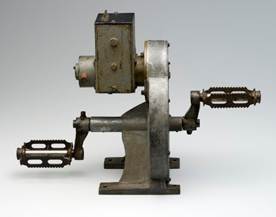
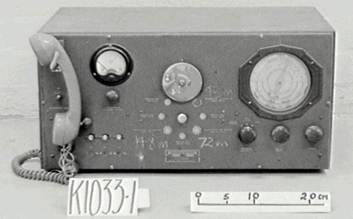
#K1033 generator for Pedal Radio; #B2125 1950s transceiver.
#1 de Havilland Drover
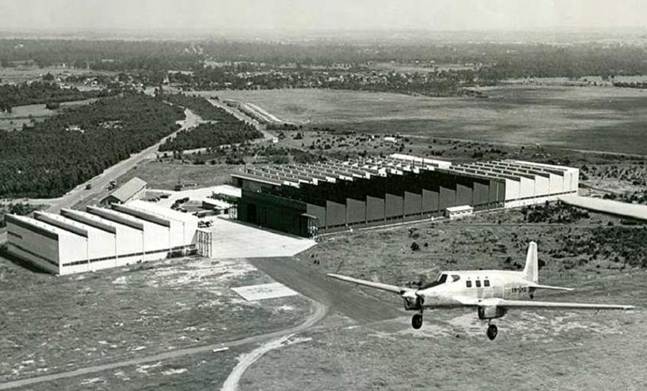
At the end of the war, current small passenger aircraft were largely obsolete, for example the de Haviland DH-50, DH-83 Fox Moth and the DH-84 Dragon, which had been used by the Royal Flying Doctor Service. De Havilland at Bankstown designed and built a small airliner that could be used by the RFDS. Though of similar size as the British de Havilland Dove, it was a completely Australian design. There were many war surplus Gipsy Major engines of 145 horsepower – three were needed, as the Dove had two 400 horsepower engines, so weight saving was also important: a fixed tailwheel undercarriage replaced the retractable tricycle undercarriage, and this also reduced maintenance needs. The prototype first flew on 23 January 1948 and is seen over the Bankstown DH factory.
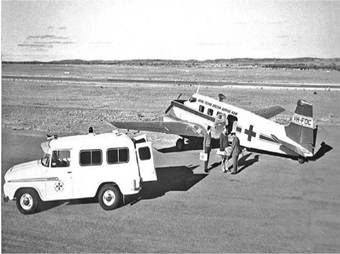 Twenty Drovers were built. There were several early
problems: the original propellers had failures in flight, and were replaced,
but the aircraft still lacked power, particularly in hot conditions. Continuing
modifications were made over the years, the most successful beginning in 1960
when in some aircraft the DH engines were replaced with Lycoming O-360
horizontally opposed engines driving Hartzell feathering constant-speed
propellers. The Drovers had varied careers, with some aircraft performing
commercial flights until the mid 1980s, largely on short-haul ‘island-hopping’
tasks.
Twenty Drovers were built. There were several early
problems: the original propellers had failures in flight, and were replaced,
but the aircraft still lacked power, particularly in hot conditions. Continuing
modifications were made over the years, the most successful beginning in 1960
when in some aircraft the DH engines were replaced with Lycoming O-360
horizontally opposed engines driving Hartzell feathering constant-speed
propellers. The Drovers had varied careers, with some aircraft performing
commercial flights until the mid 1980s, largely on short-haul ‘island-hopping’
tasks.
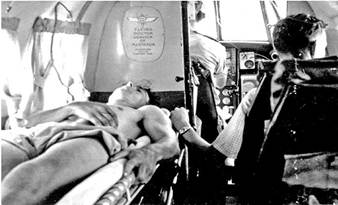 The Museum’s Drover was #19 of the twenty produced
aircraft and first flew at Bankstown in June 1956. RFDS was unhappy with the
performance and three years later it was re-engined with Lycoming engines. Sold
by RFDS in June 1967, it was in use until 1970. In 1993 it was acquired by the
Powerhouse Museum, thanks largely to the efforts of Peter Collins, then arts
Minister. Mr Collins has recently been appointed as President of Trustees of
the museum. The aircraft was on display at the Australian Aviation Museum,
Bankstown, until the museum was destroyed in 2018. It has been refurbished and
is on display at Broken Hill, as below.
The Museum’s Drover was #19 of the twenty produced
aircraft and first flew at Bankstown in June 1956. RFDS was unhappy with the
performance and three years later it was re-engined with Lycoming engines. Sold
by RFDS in June 1967, it was in use until 1970. In 1993 it was acquired by the
Powerhouse Museum, thanks largely to the efforts of Peter Collins, then arts
Minister. Mr Collins has recently been appointed as President of Trustees of
the museum. The aircraft was on display at the Australian Aviation Museum,
Bankstown, until the museum was destroyed in 2018. It has been refurbished and
is on display at Broken Hill, as below.
Top to bottom: Early RFDS PR photos; VH-DRC with original DH engines and Lycoming replacements, 1968; the museum’s Drover at RFDS, Broken Hill.
Afterword
Visitors to the Louvre, no matter how many times they have been before, typically try to catch a glimpse of Mona Lisa. At the London Museum people similarly revisit the Rosetta Stone. It’s good for the soul to see these wonderful things, like putting on a comfortable and familiar pair of mental slippers.
During the pandemic, the Transport Hall was closed for a time. I was in the museum the first weekend it was reopened. There was not a big crowd, but I was struck by the way people were responding. Small groups were wandering around, making happy reacquaintance with the traditional exhibits. Parents were telling stories to their children and in many cases the children were leading their parents to their favourites. I found it very moving.
The Transport Hall is the ‘wow factor’ of this museum. The soaring gallery and its display is an integral part of this unique, world class building, and cannot be replicated elsewhere.
In my view, the Airtruk and the Cierva autogiro, removed from the Turbine Hall in 2018 to permit the installation of a temporary artwork, should be returned. Perhaps the Genairco could be added. It would also be nice to have a Jabiru, a Nomad / Mahindra and Victa Airtourer in the collection. But this is not a specialist aviation museum such as HARS at Albion Park or the Queensland Aviation Museum. Thus, the idea of having a small, but representative collection in Australia’s only museum devoted to the interface between the applied arts and sciences has merit. Its wonderful array of early aircraft engines underpinned by the Barraclough collection, shows the engineering aspects of early aviation. The museum also has a wide range of other historical artefacts – uniforms, airmail paraphernalia, posters, photographs, and, especially, models and toys that make a magnificent resource for presenting great displays on aviation-related themes.
Please make an effort to support, and especially visit, the collection both at the Powerhouse and Castle Hill.
Thank you for reading my booklet,
Tom Lockley
About this book
It is impossible to give a full list of references for a publication such as this, There are constraints imposed by its size and format and also it is often not easy to track down the exact source of many pictures and related material.
The majority of pictures come from the MAAS collection.